A B2B lead magnet is a free and genuinely useful resource (guide, template, checklist, calculator, webinar) that you offer to a professional in exchange for their contact information. A well-designed lead magnet attracts decision-makers who match your target audience, gives you a legitimate reason to follow up, and nurtures your sales pipeline. This guide provides ten B2B lead magnet ideas, a six-step method for creating one, and best practices for converting downloads into appointments.
B2B lead magnet: the essentials
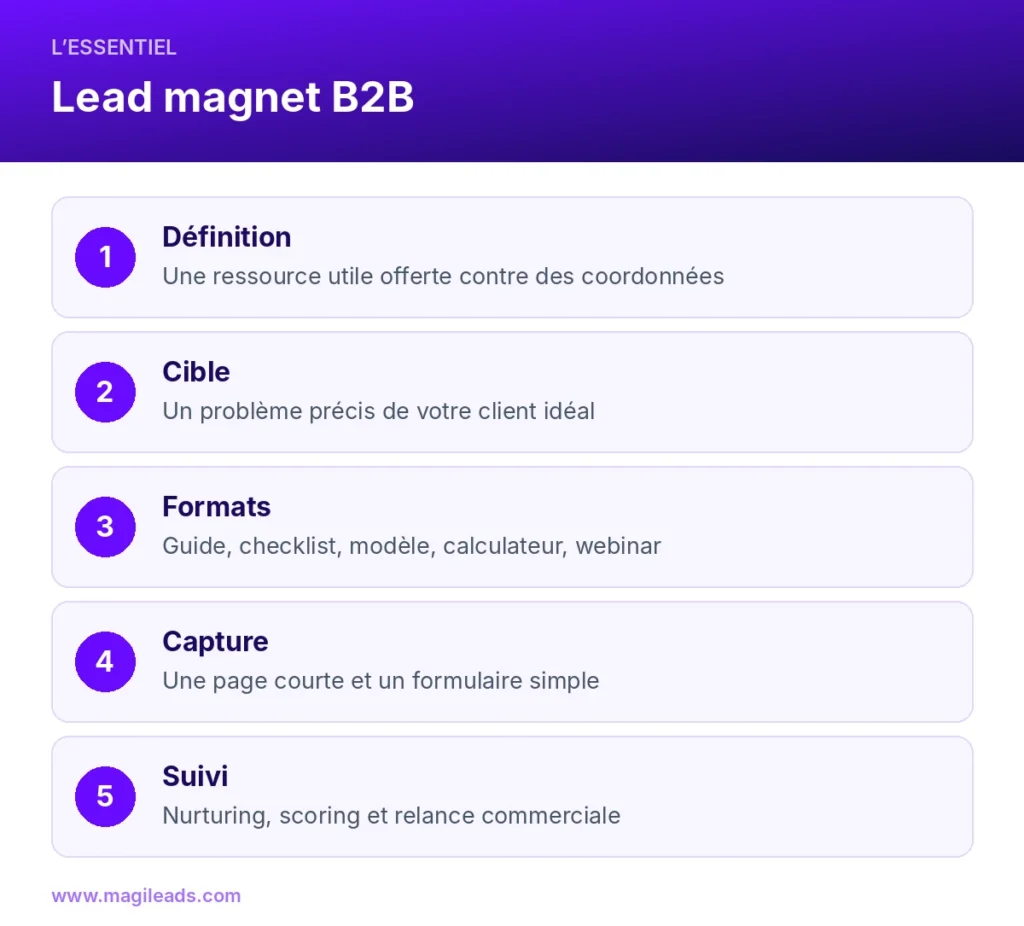
- Definition : a useful resource offered in exchange for contact information.
- Target : a specific problem of your ideal client.
- Formats : guide, checklist, template, calculator, webinar.
- Capture : a short page and a simple form.
- Follow-up : nurturing, scoring and sales follow-up.
What is a B2B lead magnet?
The term "lead magnet" literally means "a magnet for leads." The principle is simple: a visitor to your website, a LinkedIn follower, or a prospect contacted by email receives a resource that helps them solve a specific problem. In return, they provide you with their name, company, job title, and professional email address. You obtain a verified contact who has expressed interest in a topic related to your offering.
In B2B, this mechanism takes on particular importance. Sales cycles are long, several people are involved in the decision-making process, and a buyer often researches independently before speaking to a salesperson. A B2B lead magnet allows you to establish contact during this research phase, well before the request for a quote. It is part of a broader strategy for generating qualified leads, alongside direct prospecting, SEO, and advertising.
What distinguishes a good lead magnet
A good B2B lead magnet addresses a specific problem, delivers quick results, and demonstrates your expertise without being a sales brochure. A prospect should be able to use it the very next day: apply a checklist, fill out a template, and calculate a rough estimate. The more specific the promise, the more the lead magnet attracts the right people and weeds out the casual browsers.
Why a lead magnet is useful in B2B
The first benefit is lead qualification. The lead magnet's subject matter naturally filters your audience: a prospecting plan template appeals to sales managers, while a compliance guide interests lawyers or executives. Therefore, you know, from the moment they download the content, what problem the contact is concerned about.
The second benefit is the legitimacy of the follow-up. Reaching out to someone who has downloaded your guide is much more natural than a cold initial message: you can ask if they were able to use it, offer them additional resources, or discuss the matter further. The third benefit is reuse: the same B2B lead magnet can be used across your website, LinkedIn posts, email campaigns, and prospecting sequences.
10 B2B lead magnet ideas
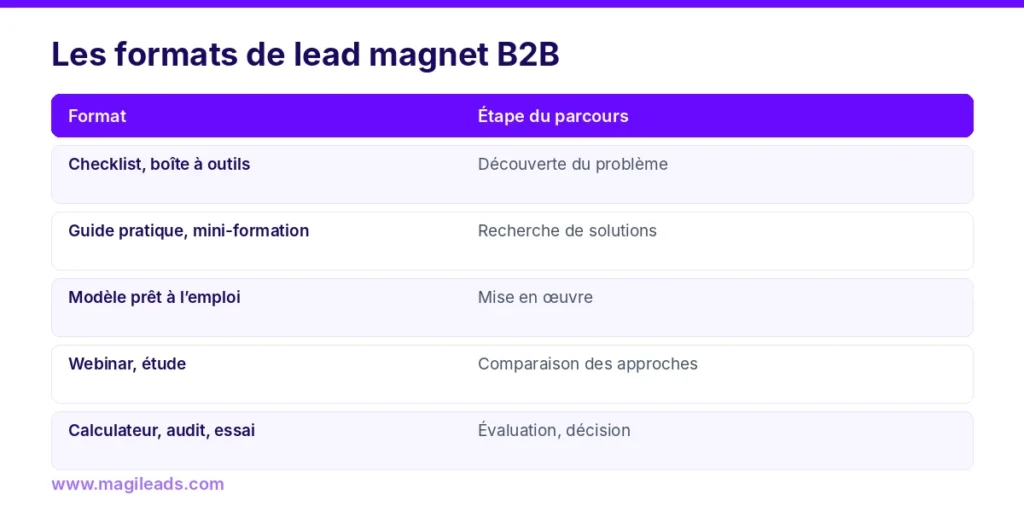
All the ideas below work in B2B. The right choice depends on your target audience, the time you have to produce the resource, and the stage of the buyer's journey you are targeting.
1. The practical guide or white paper
This is the most classic format. A practical guide covers a topic in depth, with a method, examples, and applicable advice. Avoid generic documents: a guide titled "Structuring a Three-Person Prospecting Team" will attract more specific profiles than a "Prospecting Guide.".
2. The checklist
A checklist fits on one or two pages and helps ensure nothing is forgotten: launching a campaign, auditing a website, preparing for a trade show. It's quick to create, takes only a few minutes to read, and provides immediate value, making it an excellent first B2B lead magnet.
3. The ready-to-use model
Templates for specifications, email sequences, tracking spreadsheets, and interview grids: prospects save time from the very first use. These templates are highly valued by operational teams, who often share them internally, thus expanding your reach.
4. The calculator or simulator
A spreadsheet or online tool that estimates cost, time savings, or return on investment based on user-entered data. It requires more work, but it attracts prospects who are already well into their planning and looking to cost a project.
5. The webinar
A webinar allows you to showcase your expertise live and answer questions. Registration captures the lead, and the recording can then become a permanent lead magnet. See our article on usingwebinars to qualify leads.
6. The free diagnosis or audit
A quick audit of a prospect's situation (website, database, sales process) is a highly effective B2B lead magnet: it targets companies with a genuine need and directly initiates a conversation with an expert. It is time-consuming, so reserve it for accounts that match your target audience.
7. The free trial or demonstration
For software, a free trial is often the most direct lead magnet: the prospect tests the tool on their own situations. It targets contacts further along in the buying journey than a checklist or guide.
8. The mini-training via email
A series of emails sent over several days, each addressing a specific point. This format creates a regular connection with the prospect and naturally prepares the ground for the next stage of your lead nurturing.
9. The toolbox or resource selection
An annotated list of tools, models, and methods on a given subject. It is built from your experience and is useful to people who are discovering a field.
10. The study or barometer
If you have real and verifiable data (customer surveys, anonymized analysis of your business), an original study is a very powerful B2B lead magnet, often picked up by the press and social media. Never invent figures: without solid data, choose another format.
Create a B2B lead magnet in 6 steps
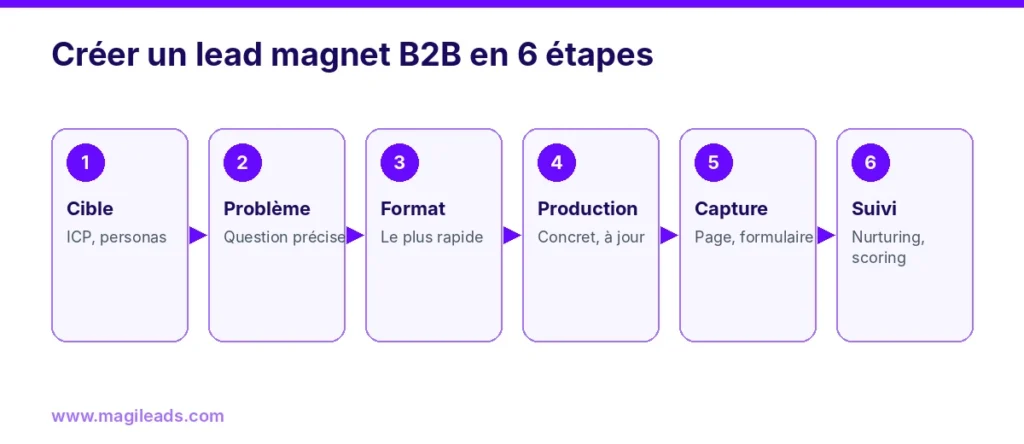
- Define your target audience : roles, sectors, company size. Rely on your ideal customer profile and personas.
- Choose a specific problem : ask your sales representatives about the questions they hear most often in meetings.
- Select the format that solves this problem most quickly: checklist, template, guide, calculator.
- Produce the resource : concrete, up-to-date content with a neat layout and your contact details.
- Create the capture page and the form, then the email to deliver the resource.
- Broadcast and follow up : promotion on your channels, then nurturing and sales follow-up.
The second step is the most important. A B2B lead magnet rarely fails because of its layout; it fails because it answers a question the target audience isn't asking. Start with your prospects' real objections and questions, and formulate the promise in their own words.
The capture page and the form
The lead capture page presents the resource and collects contact information. It should be short: a title that reiterates the promise, a few lines about what the reader will get, an image of the resource, and the form. Remove the navigation menu and any distracting links.
The form is a balancing act. Each additional field provides useful information for qualification but can discourage some visitors. Ask for the essentials (first name, last name, work email, company) and fill in the rest with enrichment. To learn more, consult our guide to optimizing your B2B lead generation forms.
Promote your lead magnet
A resource that no one sees generates no leads. Plan for promotion from the design stage. The most natural channels are your website (banners in blog posts on the same topic, exit pop-ups), your LinkedIn posts, your newsletter, your employees' email signatures, and, if you have a budget, targeted advertising.
The B2B lead magnet is also an excellent outbound prospecting. Rather than requesting a meeting in the first message, offer the resource to a targeted prospect: the request is less demanding, the response easier, and you open a conversation around a topic that concerns them.
After downloading: nurturing, scoring and follow-up
Downloading is just the beginning. A contact who receives a guide isn't necessarily ready to buy. Plan a follow-up sequence: a delivery email, then a few messages that delve deeper into the topic and suggest further discussion. Assign points to the contact's actions (opens, clicks, visits to the pricing page) using lead scoring, and pass on leads that reach your target to the sales team.
In Magileads, you can enrich your leads, qualify them with lead scoring, track them in your PRM, and integrate them into multichannel campaigns: email and LinkedIn, with SMS and voice options available for a fee. Contacts sync with HubSpot, Pipedrive, or other tools via Zapier, Make, or the API, giving your sales team a complete history.
Open access content or B2B lead magnet?
Not all your content needs to be protected by a form. A blog post, a LinkedIn publication, or a short video benefits from remaining freely accessible: they attract traffic, are easily shared, and establish your expertise. A B2B lead magnet is justified when the resource offers significantly greater value, and the prospect is willing to exchange it for their contact information: a comprehensive template, a calculation tool, or a detailed methodology.
A good practice is to link the two. A freely accessible article addresses a topic and, at the end, offers a complementary resource that enables action. The reader has already had the opportunity to assess the quality of your work and is more likely to provide their contact information. This interplay between free content and lead magnets structures your B2B lead generation funnel.
Common mistakes
The first mistake is designing a lead magnet that's too generic, attracting many contacts unrelated to your offer. The second is neglecting quality: a poorly produced document damages your image precisely when a prospect discovers your company. The third is forgetting follow-up: hundreds of downloads that receive no response generate no appointments.
Another common mistake is to entrust lead magnets solely to marketing, without involving sales. Yet, they are the ones who know the prospects' questions and who will follow up with the leads. Involve them in choosing the subject line, writing follow-up emails, and defining the scoring threshold that triggers a call.
B2B lead magnet and GDPR
Collecting contact information requires compliance with the GDPR. Clearly state on the form what the data will be used for, who will process it, and how to unsubscribe. If you wish to add the contact to your newsletter in addition to sending them the resource, include a dedicated checkbox that is not checked by default. Finally, each follow-up email must include a working unsubscribe link.
These precautions also strengthen trust. A prospect who understands what they will receive is more likely to sign up with confidence and open your messages more readily. For a software publisher, compliance and data security are paramount: Magileads is ISO 27001 certified and hosted in France.
Frequently Asked Questions
- What is a B2B lead magnet? It is a free and useful resource (guide, checklist, template, calculator, webinar) offered to a professional in exchange for their contact details.
- What's the best B2B lead magnet format? There's no one-size-fits-all format: choose the one that solves your target audience's problem the fastest. A checklist or template is often the simplest way to start.
- How many fields should the form include? Ask for the essentials (name, professional email, company) and supplement with additional information rather than lengthening the form.
- What to do after download? Send the resource, then a nurturing sequence, qualify the contacts with lead scoring and pass the most engaged ones on to the sales team.
Turn your downloads into appointments
Enrich your leads, qualify them with lead scoring and follow up with them by email and LinkedIn: try Magileads free for 14 days.