A lack of or poor management of marketing follow-up can have several negative consequences for a company.
You could miss out on sales opportunities . Without follow-up, prospects may lose interest or choose a more proactive competitor, resulting in lost conversion opportunities.
You risk a drop in conversion rates . The fact is that prospects often need several interactions before deciding to buy. Inadequate follow-up can therefore reduce these conversion chances.
You could even see your reputation affected . Indeed, poor follow-up management can damage a company's reputation, giving the impression of a lack of seriousness or negligence towards potential clients.
Dissatisfied customers, missed sales opportunities, lack of information to make the right decisions… In short, a company that ventures to neglect monitoring its marketing process and strategy is taking a big risk!
A way to bridge the gap between interest and commitment
Therefore, effective marketing follow-up is not simply an additional task but a cornerstone of successful sales strategies. By nurturing leads through personalized, value-driven interactions across the appropriate channels, businesses can improve conversion rates , foster customer loyalty, and support long-term growth.
Embrace follow-up as an opportunity to build meaningful relationships with prospects and solidify your position in a competitive landscape. Remember, the essence of follow-up lies in its ability to transform prospects into brand advocates, one interaction at a time.
Marketing follow-up refers to the systematic process of nurturing prospects and maintaining communication with them after the initial contact, with the goal of converting them into loyal customers. Contrary to what one might think, the sales process often extends beyond the first presentation or proposal. In fact, many potential customers require multiple touchpoints and interactions before making a purchase decision . This is where the crucial role of follow-up lies: bridging the gap between interest and commitment.
4 main advantages of effective marketing tracking
There are many benefits you can gain from good marketing tracking. However, we can summarize them in 4 key points.
1 – Building trust and credibility
Consistent follow-up demonstrates reliability and a genuine interest in solving the prospect's problems. It builds trust and establishes your brand as a trusted partner.
2 – Early identification and resolution of problems
Regular communication allows businesses to quickly address concerns and objections, preventing potential customers from seeking alternatives.
3 – Increased sales conversion rates
Statistics reveal that a significant percentage of sales require multiple follow-up attempts. By remaining engaged with prospects, businesses increase their chances of converting leads into paying customers.
4 – Customer retention and loyalty
Beyond acquiring new customers, follow-up efforts contribute to customer retention. Ongoing communication ensures that customers feel valued and supported even after the initial sale.
How to create the right strategy to implement monitoring?
Implementing an effective tracking strategy requires a combination of organization, personalization, and the use of digital tools. Here are some concrete strategies to optimize your tracking process:
1 – Choose the right communication channels
Understanding your prospects' preferences is essential. While emails are widely used for their convenience and ability to convey detailed information, phone calls offer a more personal touch and immediate engagement. Text messages and social media platforms like LinkedIn can also be effective for direct and rapid communication. The choice of channel should align with the prospect's communication habits and the nature of the relationship.
2 – Personalize your approach
Avoid follow-up messages that are meant for everyone. Personalization is crucial for building meaningful connections with prospects . Refer to specific discussions, pain points, or interests expressed during previous interactions. This tailored approach demonstrates attentiveness and increases the likelihood of engagement.
3 – Segment your leads
Not all leads are created equal . Segment prospects based on their readiness to buy (e.g., cold , warm, hot leads) to effectively prioritize follow-up efforts. Tailor your messaging and communication frequency to each segment's level of interest and engagement.
4 – Offer value through content
Beyond sales pitches, provide prospects with valuable content that addresses their challenges and interests. Share industry insights, case studies, success stories, or educational resources that demonstrate your expertise and highlight the benefits of your products or services. This approach positions your brand as a valuable resource and cultivates trust over time.
5 – Establish a structured follow-up plan
Consistency is key in follow-up efforts. Develop a structured follow-up plan that includes emails, calls, or messages scheduled at strategic intervals. You Magileads ' built-in PRM tool to automate reminders and track interactions, ensuring no opportunity slips through the cracks.
6 – Knowing when to pivot or let go
Not all leads will progress through the sales funnel at the same pace. Monitor each prospect's readiness using frameworks like BANT (Business, Authority, Need, Timing) to assess their likelihood of conversion. If a prospect isn't responsive or doesn't meet the necessary criteria, consider adjusting your approach or temporarily pausing follow-up efforts while retaining their information for future engagement.
What tool is best for effective marketing tracking?
The reason why a company most often postpones follow-up is that it is a complex and time-consuming task.
Therefore, you need a tool that automatically and correctly analyzes your prospecting data and through which you can evaluate your results in real time.
Ideally, you would have this functionality in a tool where you can also manage all of your marketing processes.
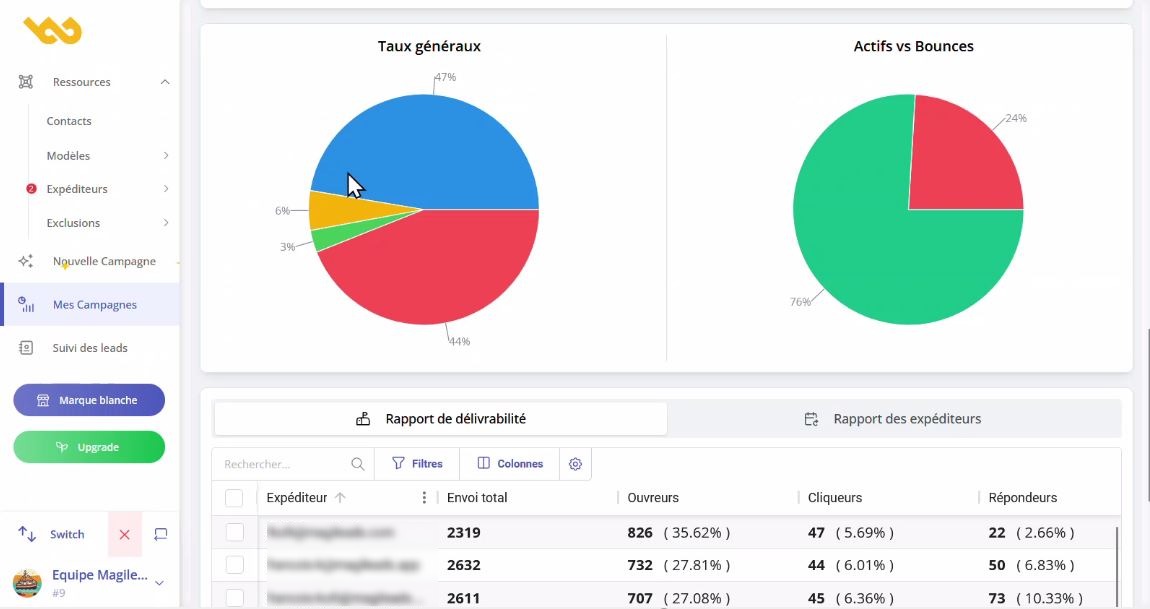
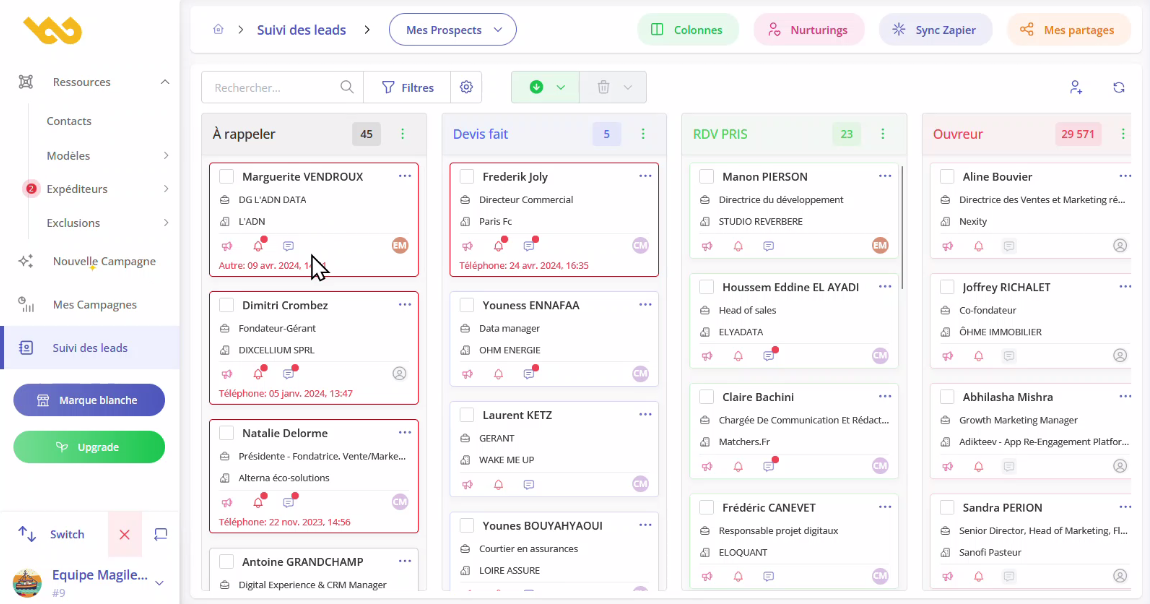
Magileads V 3.0 is an all-in-one solution that addresses this need. Its "Lead Tracking" gives you a comprehensive overview of your marketing activities and results.
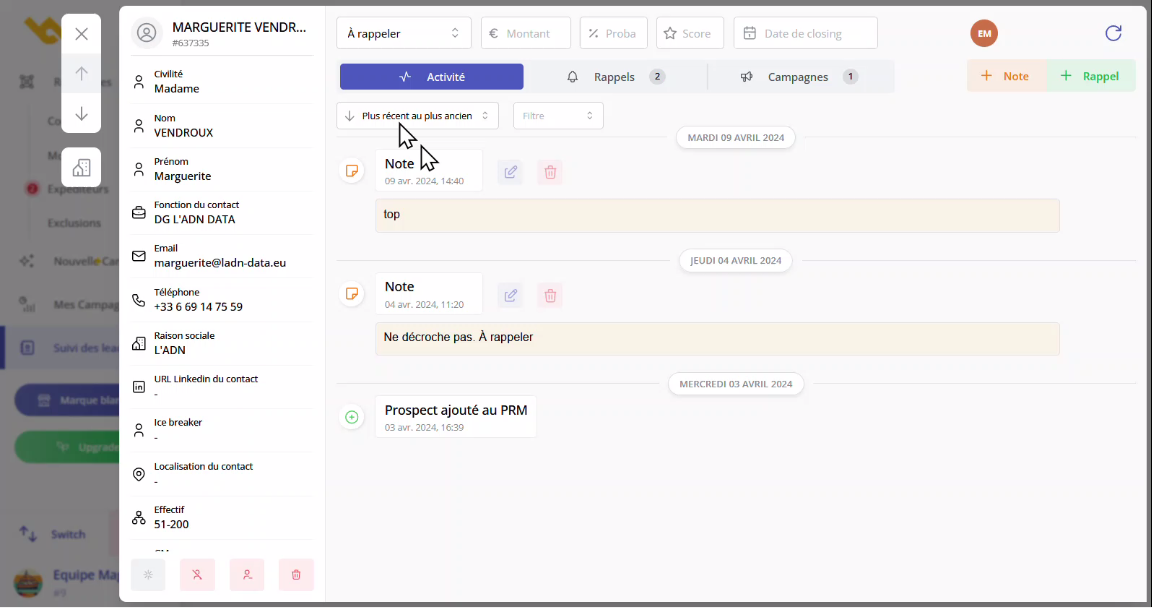
You also have a detailed view of each prospect's journey:
And to top it all off, the statistical graphs give you a detailed and comprehensive view of your actions and results: