

Analysis of the determining factors in B2B purchasing decisions
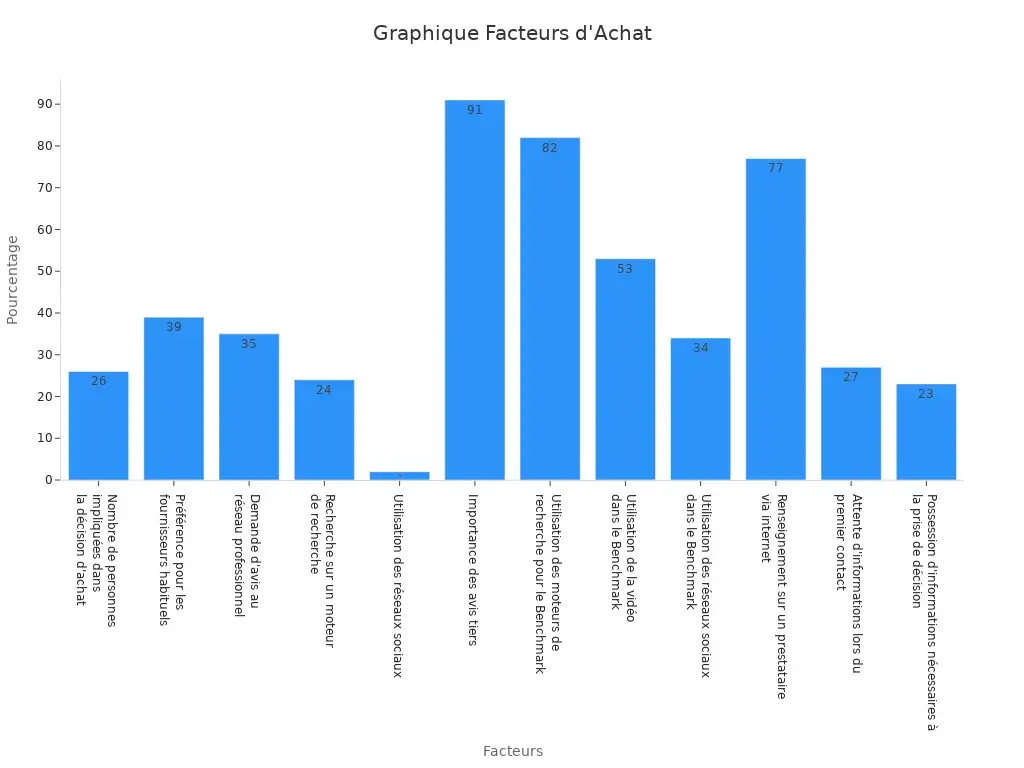
B2B purchasing decisions play a crucial role in business performance. You'll notice that the purchasing process has become significantly more complex. Professionals now conduct an average of 12 searches before making B2B purchasing decisions, and 62% prefer to gather information independently rather than contacting a salesperson. Social networks, particularly LinkedIn, are becoming essential tools, with 82% of buyers using these platforms to gather information. These developments highlight the importance of adapting your strategy to meet specific expectations and maximize the impact of your B2B purchasing decisions.
Key points
B2B buyers conduct approximately 12 online searches before making a purchase. Improve your website to capture their attention.
Adapting interactions is very important. 71% of customers like experiences that meet their needs.
Protecting data and following the rules is essential. Respect the laws to influence purchasing decisions.
Companies need to demonstrate the value of their products. Good value for money attracts customers.
Use numbers and data to change your sales plans and achieve greater success.
Factors influencing B2B purchasing decisions
Psychological and social factors
B2B purchasing decisions aren't solely based on rational criteria. Emotions and cognitive biases play a crucial role in the process. For example, approximately 90% of B2B purchasing decisions are formed unconsciously . This demonstrates the significant influence emotions have on buyers' choices. You must also consider social expectations. 71% of consumers desire personalized interactions, and 76% feel frustrated when this doesn't occur. These figures underscore the importance of creating experiences tailored to each customer.
Herbert Simon's theory of bounded rationality explains that decision-makers cannot always analyze all rational elements before making B2B purchasing decisions. This reinforces the idea that psychological and social factors are unavoidable in the purchasing process.
Technological factors and digital transformation
Digital transformation is redefining B2B purchasing practices. Today, 60% of B2B purchasing decisions are made before any contact with a supplier . This demonstrates that buyers rely heavily on information available online. Therefore, you must optimize your digital presence to meet their expectations. Furthermore, 92% of purchasing decision-makers see digitalization as an opportunity to increase the value of their work. This includes the use of technologies such as artificial intelligence and data analytics tools to improve performance.
Factors related to safety and regulation
Security and regulatory compliance are top priorities for B2B buyers. You must guarantee data protection and adhere to applicable standards, such as the GDPR. This regulation imposes strict standards, and fines for non-compliance can reach €20 million or 4% of annual turnover . These requirements directly influence B2B purchasing decisions. Buyers favor reliable and transparent partners. Security thus becomes a key criterion in supplier selection.
Companies must also integrate solutions to build trust. For example, third-party reviews play a key role, with 91% of buyers considering them essential in their B2B purchasing decision-making process.
Economic and organizational factors
Economic and organizational factors play a central role in B2B purchasing decisions. You must understand that these elements directly influence how companies evaluate their options and make their B2B purchasing decisions.
Cost and return on investment (ROI)
Cost remains one of the most decisive criteria. Companies seek to maximize their return on investment while minimizing unnecessary expenses. You must clearly demonstrate the added value of your products or services. For example, a solution that reduces operating costs or improves efficiency may become a top choice. Buyers often compare several suppliers to identify the one that offers the best balance between quality and price.
Tip : Provide case studies or concrete examples showing how your solution has enabled other companies to save money or increase their productivity.
Organizational structure and internal processes
Organizational structure also influences B2B purchasing decisions. You must consider your clients' internal processes. Some companies favor standardized solutions to simplify their management, while others seek customized options tailored to their specific needs. Approval cycles, allocated budgets, and strategic priorities are all factors that shape the purchasing process.
Organizational factors | Impact on B2B purchasing decisions |
|---|---|
Approval cycles | They lengthen the decision time |
Budgets allocated | They limit the available options |
Strategic priorities | They focus on targeted solutions |
External economic pressures
Economic fluctuations, such as exchange rate variations or financial crises, influence B2B purchasing decisions. You need to stay attuned to market trends and adapt your offerings accordingly. For example, during periods of economic uncertainty, companies often favor more affordable solutions or flexible payment models.
Cross-functional collaboration
In many companies, B2B purchasing decisions involve multiple departments, such as finance, operations, and procurement. You need to understand each stakeholder's needs to offer a solution that meets their expectations. Clear communication and a collaborative approach can streamline the process and build trust.
Note : A proactive approach that anticipates the needs of different departments can help you stand out from your competitors.
In conclusion, economic and organizational factors require in-depth analysis and a strategic approach. You must demonstrate the value of your offering while taking into account your clients' internal and external constraints.
B2B purchasing decision processes
Identifying needs and finding solutions
The B2B purchasing decision-making process begins with identifying needs. You must understand your organization's specific challenges and define clear objectives. This step is crucial, as it influences all subsequent decisions. According to an Accenture study, 74% of B2B buyers conduct more than half of their research online before contacting a supplier. This highlights the importance of having readily available and relevant information about your products or services.
Buyers typically conduct 12 online searches before making a purchase. They compare available options, analyze reviews, and evaluate the solutions that best meet their needs. Therefore, you must optimize your digital presence and provide informative content to capture their attention at this early stage.
Roles of stakeholders in the decision-making process
In B2B, several stakeholders are involved in the decision-making process. Each role plays a specific function and influences the final choice. Here are the main roles you need to know:
Initiator : Identifies the need and launches the process.
Buyer : Manages administrative and financial aspects.
Decision-maker : Makes the final decision.
Influencer : Provides recommendations based on their expertise.
Auditors : Ensure compliance with internal standards and policies.
User : Evaluates the solution based on its practical use.
Understanding these roles allows you to adapt your approach and meet the expectations of each stakeholder. For example, by identifying influencers, you can strengthen your technical arguments to gain their support.
Risk and uncertainty management
Risk management is essential in the purchasing process. You must assess the potential risks associated with each decision and propose solutions to minimize them. Risks are often quantifiable, allowing you to use data to make informed decisions. In contrast, uncertainties, which depend on unpredictable events, require a more flexible approach.
Data analysis plays a key role in reducing uncertainty. Dashboards and indicators, such as conversion rates, provide valuable information to guide your decisions. By investing in initiatives based on reliable data, you increase your chances of success while minimizing unforeseen events.
Proactive risk and uncertainty management strengthens stakeholder confidence and improves the quality of B2B purchasing decisions.
Business strategies to optimize B2B purchasing decisions
Approaches focused on sustainability and social responsibility
Companies are increasingly adopting sustainability-focused strategies to meet the expectations of B2B buyers. You can integrate responsible practices into your offerings, such as using recycled materials or reducing your carbon footprint. These initiatives attract buyers who prioritize partners aligned with their values. For example, one company saw an increase in sales after adjusting its digital channels to promote its environmental commitments.
Environmental certifications also boost your credibility. You can obtain recognized labels, such as ISO 14001, to demonstrate your commitment to sustainability. This helps you stand out in a market where 85% of buyers seek partners with in-depth expertise in their field .
Strengthening customer trust and loyalty
Trust is a key driver for optimizing B2B purchasing decisions. You need to build strong relationships with your clients by offering complete transparency about your products and services. Buyers are almost twice as likely to recommend your company if they trust you. This highlights the importance of maintaining clear and honest communication.
Customer loyalty also plays a key role. A 5% increase in customer retention can generate profit increases of up to 95% . You can strengthen this loyalty by offering rewards programs or personalized services. For example, a B2B decision-maker might purchase a product following a positive recommendation, highlighting the impact of word-of-mouth.
Using data and KPIs to improve performance
Data and key performance indicators (KPIs) are powerful tools for optimizing your sales strategies. You can measure the number of new leads generated through your prospecting efforts. This allows you to assess the reach and effectiveness of your campaigns. Email response rates, for example, reflect the impact of your communications and help you adjust your actions.
Social media also offers valuable insights. A high engagement rate indicates a receptive audience, which boosts your brand visibility. By using this data, you can make informed B2B purchasing decisions to improve your business strategy. Effective performance tracking maximizes your revenue and optimizes your resources.
Tip : Adopt the SMART method to define measurable goals. Companies using this approach see a 30% increase in their conversion rate in just 12 months.
Case studies and practical examples

Case studies of companies that have adopted innovative strategies
Some companies have transformed their B2B purchasing practices through innovative strategies. You can draw inspiration from their approaches to optimize your own processes. Here are a few concrete examples:
Cost optimization : A company renegotiated its contracts with suppliers, consolidated its purchasing, and reduced its direct expenses by 15% . This method freed up resources for strategic investments.
Quality improvement : A company specializing in industrial equipment collaborated closely with its suppliers to improve product specifications. This initiative increased customer satisfaction by 25%.
Operational efficiency : A technology company automated its purchasing processes, reducing processing times by 40% and minimizing errors. This allowed teams to focus on high-value tasks.
Tip : Adopt a collaborative approach with your suppliers to identify opportunities for improvement. Experience shows that this method strengthens trust and the quality of partnerships.
Lessons learned from rapidly changing sectors
Rapidly changing industries offer valuable lessons for B2B companies. You can apply these lessons to stay competitive in a constantly evolving environment. Here are five key practices:
Market data analysis : Study consumer trends and competitor movements to identify opportunities.
Technology monitoring : Follow technological innovations to detect emerging trends and adapt your strategies.
Customer feedback and engagement : Use customer feedback to improve your offerings and discover new opportunities.
Cross-sector collaboration : Establish partnerships with companies from other sectors to develop innovative solutions.
Predictive analytics : Anticipate market developments with advanced analytics tools and act quickly.
A B2B strategy expert points out that companies investing in predictive analytics increase their ability to respond to market needs by 30%. You can also leverage cross-industry collaborations to access new resources and insights.
Note : Customer feedback and market data are powerful tools to guide your B2B purchasing decisions. By integrating them into your strategies, you maximize your chances of success.
Future prospects for B2B purchasing decisions
Impact of new technologies on purchasing practices
New technologies are profoundly transforming B2B purchasing practices. You'll notice that B2B e-commerce is experiencing rapid growth, even surpassing that of B2C. In 2023, this sector saw a 19% , reaching $1.7 trillion, well ahead of schedule. This trend demonstrates that businesses are increasingly adopting digital channels for their transactions.
Digital interactions now dominate business transactions. More than 90% of sales activities take place remotely, via tools such as video conferencing or telephone. This model is considered as effective, or even more so, than traditional methods by more than half of businesses. You can capitalize on this trend by investing in high-performing digital platforms and offering personalized experiences.
Omnichannel strategies are also gaining popularity. Businesses combine online and offline channels to attract customers and build loyalty. For example, you can use digital channels to capture shoppers' attention, then physical channels to offer a personalized experience.
Tip artificial intelligence tools to analyze buyer behavior and anticipate their needs. This allows you to improve your performance and remain competitive in a rapidly changing market.
Evolving expectations of B2B customers
B2B customer expectations are evolving rapidly. You'll notice that personalization is becoming a key factor in standing out. Companies that adopt personalized strategies see their conversion rates increase five to eight times. You can meet this demand by offering solutions tailored to each customer's specific needs.
Sustainability is also a growing priority. Buyers are looking for partners committed to responsible practices. You can obtain environmental certifications, such as ISO 14001, to strengthen your credibility. These initiatives attract customers who favor companies aligned with their values.
Artificial intelligence plays a vital role in enhancing the shopping experience. You can leverage this technology to automate processes, analyze data, and deliver personalized recommendations. This helps you meet customer expectations while optimizing your resources.
Note : B2B clients value transparency and responsiveness. By communicating clearly and responding quickly to their requests, you strengthen their trust and loyalty.
Influence of future regulations on B2B purchasing decisions
Future regulations will have a significant impact on B2B purchasing decisions. You must prepare for longer purchasing cycles, with an average increase of 27% in duration. This trend stems from the increasing complexity of standards and compliance requirements.
Customer journeys are becoming increasingly digital. Today, 67% of interactions take place online, and 85% of buyers define their needs before contacting a supplier. You can optimize your digital presence to meet this demand. For example, by offering informative and accessible content, you facilitate B2B purchasing decisions for buyers.
However, nearly 50% of purchasing processes fail. Therefore, you must identify potential obstacles and propose solutions to overcome them. Transparency and reliability are essential criteria for convincing buyers.
Tip : Invest in risk management tools to anticipate the impacts of future regulations. This allows you to remain compliant while minimizing disruptions to your procurement processes.
B2B purchasing decisions in 2025 are influenced by a variety of factors, including digital transformation, customer expectations, and regulations. According to McKinsey, 70% of the buying journey is self-directed, highlighting the importance of digital interactions. You also need to align stakeholders, as recommended by Brent Adamson of Gartner, to ensure a shared vision.
To remain competitive, adopt strategic monitoring to anticipate trends and prioritize a high-quality customer experience. E-commerce is becoming essential to meet modern expectations. By integrating these approaches, you optimize your performance and build customer loyalty.
FAQs
What are the main factors influencing B2B purchasing decisions in 2025?
B2B purchasing decisions are influenced by digital transformation, customer expectations, sustainability, and regulations. You must also consider economic, organizational, and technological factors to optimize your strategies.
How can companies strengthen B2B customer trust?
You can build trust by offering complete transparency about your products and services. Communicate clearly, respond quickly to inquiries, and offer solutions tailored to your customers' specific needs.
Why is sustainability important in B2B purchasing?
Sustainability attracts customers who prioritize partners aligned with their values. You can integrate responsible practices, such as using recycled materials or reducing your carbon footprint, to meet these expectations.
How can data improve business performance?
Data allows you to analyze buyer behavior and optimize your strategies. Use key performance indicators (KPIs) to measure the effectiveness of your campaigns and adjust your actions accordingly.
What technological tools can transform B2B purchasing practices?
Artificial intelligence and digital platforms are essential tools. You can use them to automate processes, personalize experiences, and analyze data to improve your performance.
🗣 User reviews (B2B buyers)
Claire D., Purchasing Director in a B2B software company
“Before choosing a supplier, I always consult customer reviews and case studies. Trust has become as important as price.”
Jean-Marc R., IT Manager in an industrial group
“Decisions are never made alone. There is a committee, a risk analysis, and above all, a strong expectation regarding the projected ROI. A good salesperson knows how to reassure and convince the entire group.”
Léa T., Marketing Manager in a startup
“We use a decision-making framework with objective criteria: technical compatibility, customer support, deadlines, scalability… But ultimately, it’s often the relationship with the salesperson that makes the difference.”
Hugo F., CEO of a logistics SME
"I chose our latest SaaS provider after attending a webinar. Their educational approach and ability to address my specific issues were decisive factors."
🎓 Expert experiences (studies and quotes)
Gartner (2025)
"The typical B2B buying cycle involves an average of 6 to 10 stakeholders, each with 4 to 5 sources of information to process."
This significantly complicates decision-making and necessitates a multi-channel and personalized approach.
McKinsey & Company
“B2B buyers now prefer a hybrid journey: 70% of decision-makers want to be able to buy remotely or self-service, even for amounts exceeding €50,000.”
👉 This shows the importance of a strong digital presence and a seamless customer experience.
Stéphanie R., B2B Purchasing Strategy Consultant
"In 80% of cases, buyers are looking to reduce risk, not just get a good deal. Showing references, guarantees, and past results is essential today."
Forrester Research
"62% of B2B decisions are based on the quality of the perceived experience during the buying journey."
Content, demonstrations, and interactions prior to purchase directly influence conversion.