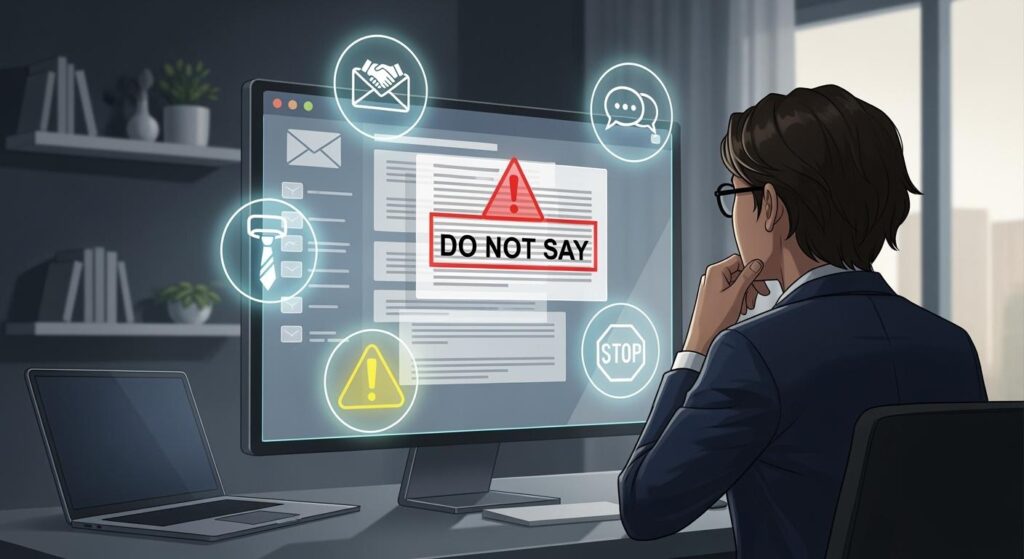
Understanding your prospects' pain points is essential to offering them a suitable solution and increasing your chances of closing a sale. By identifying the problems they face and showing them how your product or service can solve them, you build trust and encourage them to make a purchase.
Here are 5 effective techniques to identify your prospects' pain points:
1. Conduct individual interviews
Individual interviews are an excellent way to gather detailed qualitative information about your prospects' needs and challenges. You can conduct them in person, by phone, or via video conference.
During the interview, ask open-ended questions that encourage your prospects to talk about their problems. For example, you could ask them:
- What are the main challenges you are currently facing in your work?
- What frustrates you the most about your current situation?
- What are your objectives and how does your company hope to achieve them?
- Are there any obstacles preventing you from achieving your goals?
2. Analyze surveys and polls
Surveys and polls allow you to gather information from a wide range of prospects quickly and efficiently. You can distribute them online, via email, or on social media .
When creating your survey or poll, be sure to ask clear and concise questions that will allow you to understand the most common pain points of your prospects. You can also include open-ended questions to allow them to share their experiences and thoughts.
3. Monitor interactions on social media
Social media is a goldmine of information about what your prospects think and feel. By monitoring their online conversations, you can identify common problems and pain points.
Pay attention to hashtags, mentions, and comments related to your industry. You can also use social monitoring tools to help you analyze online conversations at scale.
4. Analyze online reviews and comments
Online reviews and comments can provide valuable insights into your customers' experiences with your products or services. Read reviews carefully, especially negative ones, to identify common pain points.
You can also use sentiment analysis tools to help you quickly identify positive and negative sentiments expressed in online reviews.
5. Observe user behavior
By observing user behavior on your website or in your application, you can identify points of friction and obstacles that may prevent them from achieving their goals.
Use analytics tools to track clicks, scrolls, and conversions. You can also conduct user testing to directly observe how people interact with your product or service.

What is the purpose of pain points in B2B marketing?
In B2B marketing , pain points are the challenges and problems your prospects and customers face in their day-to-day business. By identifying and understanding these pain points, you can position your product or service as the ideal solution to address them.
Here are some of the benefits of using pain points in your B2B marketing:
- Improve the targeting of your marketing messages : By understanding the specific pain points of your different customer segments, you can create more relevant and impactful marketing messages that resonate with each group.
- Increase conversion rate pain points , you make them more likely to make a purchase.
- Building customer loyalty : By continuing to identify and address the pain points of your existing customers, you can strengthen their satisfaction and loyalty to your brand.
- Developing new products and services : By understanding your customers' pain points, you can identify new opportunities to develop products and services that meet their needs.
Here are some examples of common pain points in B2B marketing:
- Generating leads : Finding new potential customers can be a challenge for many B2B companies .
- Nurturing leads : Transforming leads into qualified potential customers can take time and effort.
- Closing sales : Closing complex sales can be difficult, especially if you face strong competition.
- Customer loyalty : Keeping customers satisfied and engaged can be costly and difficult.
- Managing growth : Managing the growth of a B2B company can be a challenge, especially in terms of resources and processes.
How to use pain points to convert more?
Using your prospects' pain points to your advantage is an effective way to increase conversions and boost your business.
Here are some tips to help you use pain points to convert more:
1. Identify your prospects' most significant pain points
As mentioned earlier, the first step is to identify the most common pain points your prospects face. You can do this using the techniques described previously, such as one-on-one interviews, surveys and polls, social media , and so on.
2. Target your marketing messages on these pain points
Once you know your prospects' biggest pain points, you can create marketing messages that directly address those issues. This will show your prospects that you understand their challenges and have the solution to solve them.
3. Use emotional language
When discussing your prospects' pain points, use emotional language to capture their interest and engagement. Explain how their problems affect their business and daily life, and show them how your product or service can help them overcome them.
4. Quantify the benefits of your solution
Don't just tell your prospects that your product or service can solve their problems. Show them how it can help them with concrete figures. For example, if your software can help businesses save time, quantify the number of hours they can save each year.
Including testimonials from satisfied customers and case studies on your website and in your marketing materials can help convince your prospects that your product or service can actually solve their problems.
6. Provide proof of your expertise
Demonstrate your expertise in your field by publishing articles, giving talks, and participating in industry events. This will help you establish your credibility and build trust with potential clients.
7. Offer a free trial or demo
Allowing your prospects to try your product or service for themselves is an excellent way to convince them of its value. Offer a free trial or demo so they can discover firsthand how your solution can solve their problems.
8. Make it easier to take action
Ensure the purchasing process is simple and transparent. Eliminate any unnecessary friction and make it as easy as possible for your prospects to complete their purchase.
—————————
Magileads is a prospecting automation software
Try Magileads free for 14 days. Click here .
Or, visit our website to see how we work. Click here .