By 2025, you need to grasp the importance of business signals to transform your B2B prospecting.
A fundraising round, a strategic partnership, or the launch of a new product opens the door to new opportunities.
Timing remains crucial: acting at the right time maximizes your chances of success.
Today you benefit from advanced tools like Magileads. Thanks to AI, automation, and predictive scoring, you can:
Identify the most promising leads with more accuracy
Gain up to 15 hours per week on your prospecting tasks.
Improve your engagement rate by 45% through personalization.
Business type | AI tool used | Measured result |
|---|---|---|
Generative AI, Domo | Increase in revenue | |
Medical Center | AI-powered specialized voicebot | Optimized appointment management |
Professional pest control technician | AI automated call | Easier prospecting, time savings |
Adopt a proactive and personalized approach to leverage every detected signal and boost your conversions.
Key Points on Business Signals
Business signals are concrete clues that reveal business opportunities to be seized quickly.
Uses tools like Magileads to automate the detection, scoring, and management of business signals.
Personalize your messages based on business signals
detected to significantly increase your conversion rate.Prioritize your leads with intelligent AI-powered scoring to focus your efforts on the most promising prospects.
Integrate business signals into your CRM to receive real-time alerts and automate sales actions.
Respect data security and GDPR compliance to strengthen the trust of your prospects.
Align marketing and sales teams to improve lead qualification and accelerate sales transformation.
Regularly measure the impact of your prospecting with clear indicators to adjust your strategy and maximize your ROI.
Business signals: definition and implications
Definition of business signals
You need to understand what business signals are to succeed in your prospecting in 2025. A business signal is a concrete, detectable clue within a company's ecosystem that indicates a change, a need, or a business opportunity. These business signals come from various sources and manifest in several forms. Here are the factual elements that define a business signal in today's B2B context:
Firmographic data : information about a company's sector, size, location, or financial health.
Technographic signals : adoption or change of technologies, such as the integration of a new CRM.
Event-based signals : news such as a fundraising round, a massive recruitment drive, or the opening of a new office.
Action-based signals : observed behaviors, such as a visit to your website, an interaction on LinkedIn, or participation in a webinar.
Data freshness : you must act quickly, because an outdated signal loses all its value.
Tip: Use a solution like Magileads to centralize and update these signals in real time.
Types of business signals to watch for
To maximize your chances of conversion, you need to monitor several types of business signals :
Job change
When a decision-maker changes roles or joins a new company, they often review their suppliers and tools. This creates an ideal opportunity to offer your services.
Fundraising
A company that raises funds seeks to accelerate its growth. It invests in new tools, recruits, and opens itself up to new partners.
Growth and recruitment
A wave of recruitment or an announcement of growth signals a need for support, HR solutions or tools to support expansion.
Adoption of technologies
Integrating new technology (CRM, marketing automation) reveals a desire to optimize processes. You can then offer complementary solutions.
Publications and interactions
LinkedIn posts, blog articles, and social media interactions reveal a company's interest in certain topics. Analyze these business signals to personalize your approach.
Challenges for B2B prospecting
By 2025, detecting business signals will become essential for three major reasons:
Timing : You contact the prospect when they are most receptive.
Personalization : You adapt your message according to the actual context of the company.
ROI : You focus your efforts on high-potential leads, which increases your conversion rate.
Recent studies show that monitoring digital, transactional, and behavioral business signals improves segmentation and triples the generation of qualified appointments. Using intelligent, AI-powered scoring, like Magileads', allows you to identify the best leads with 85% accuracy and optimize the timing of contact. This increases your efficiency and boosts customer retention by up to 40%.
Tip: Automate the detection and scoring of business signals to double your productivity and generate more business opportunities.
Sources and channels of business signals
Professional social networks
Want to spot the best opportunities? Start by monitoring professional social networks like LinkedIn. These platforms bring together the majority of B2B decision-makers. According to the 2020 Social Selling France Barometer, 85% of decision-makers use LinkedIn in their work, 45% have already responded to a sales solicitation, and 20% have made a purchase after making contact on these networks. You can therefore identify job changes, recruitment announcements, or strategic posts there.
To use these channels effectively:
Set up a daily monitoring system for company profiles and pages.
Analyze interactions (likes, comments, shares) to identify topics that interest your prospects.
Use tools like Magileads to automate the detection of business signals and receive real-time alerts.
Tip: Regularly publish high-value content and interact with your community to generate business signals of interest and strengthen your credibility.
Professional social networks aren't just for communication. They allow you to identify leads, stay up-to-date with your target audience's news, and detect key events like mergers or management changes. This multi-source approach, updated in real time , makes these platforms an essential tool for your prospecting efforts.
Databases and industry monitoring
To go further, you need to rely on reliable databases and structured industry monitoring. The National Business Register (RNE) and databases like Sirene give you access to up-to-date information on company activity: creations, deregistrations, changes in management, financial statements.
Here's how to optimize your monitoring of business signals:
Connect to APIs ( like Sirene) to automate data collection.
Create a dashboard with industry indicators and customized alerts.
It cross-references legal, financial, and operational data to detect business signals
weak.
Automation and data analysis, combined with artificial intelligence, allow you to anticipate market movements. You become more responsive and target companies at the right time. Collaboration between sales, legal, and finance teams strengthens the relevance of your analyses and the reliability of the business signals detected.
Scraping and enrichment tools
Want to save time and never miss a thing? Use web scraping tools to automatically extract public information about your prospects. These solutions collect data from websites, social media, and professional directories. This allows you to enrich your prospect profiles with up-to-date information: technologies used, recent hires, and significant news.
To implement an effective strategy:
Select tools that are GDPR compliant and capable of filtering relevant data.
Parameter of scraping scenarios to monitor significant changes (new establishments, fundraising, appointments).
Integrate this data into your CRM to centralize information and trigger automated actions.
Tip: Combine scraping with enrichment solutions like Magileads to get a complete view and prioritize your business actions.
By using these three channels, you multiply your chances of detecting relevant business signals and acting before your competitors.
Company news and publications
To identify business opportunities in 2025, you need to closely monitor the news and publications of your target companies. These sources offer valuable information about your prospects' projects, priorities, and strategic shifts. This allows you to anticipate their needs and adapt your prospecting strategy accordingly.
Here's how to effectively use these sources:
Identify key information channels.
Regularly consult company websites, press releases, company blogs, and newsletters. Also analyze articles published in the trade press or on industry platforms.Set up automated monitoring.
Use monitoring tools to receive alerts as soon as a company publishes new information. Magileads allows you to centralize this news and link it to your prospect records. You save time and never miss an important signal.Analyze the content of publications.
Identify announcements of new products, strategic partnerships, appointments, or financial results. These events often reveal support needs, new budgets, or changes in priorities.Cross-reference information.
Compare a company's news with industry trends. If several players announce investments in a technology, you can offer complementary solutions or tailored services.Personalize your approach.
When you spot a business opportunity in a post, mention it in your message. This shows you understand the context and are offering a relevant solution.
Tip: Create a tracking spreadsheet to note significant updates for each prospect. This will allow you to prioritize your actions and tailor your messages based on the business signals detected.
News source | Type of information detected | Recommended action |
|---|---|---|
Press release | Product launch | Propose a partnership offer |
Company blog | Adoption of a new technology | Present a related solution |
Sector article | Growth or fundraising | Offering targeted support |
By following these steps, you transform information into a competitive advantage. You detect business signals at the right time and adapt your prospecting to maximize your chances of conversion.
Automated detection of business signals
Automation of monitoring
To identify the best opportunities, you need to automate your business intelligence. Modern tools like Magileads allow you to continuously monitor professional social networks, databases, and news sites. You can configure advanced filters based on geographic area, industry, or company size. This way, you receive real-time alerts as soon as a job change, fundraising round, or new publication appears.
Here's how to automate your monitoring effectively:
Setting up monitoring scenarios on LinkedIn to track key movements (job changes, recruitments, publications).
Uses scraping solutions to automatically collect relevant public information.
Centralize all data in a dashboard to quickly visualize new opportunities.
Tip: Magileads offers you an intuitive interface where you can classify, filter and process detected business signals without wasting time.
Automating your monitoring allows you to never miss an important signal and to act before your competitors. You gain responsiveness and optimize your time management.
AI-powered scoring and prioritization
You then need to prioritize the detected signals to focus your efforts on the highest-potential prospects. Artificial intelligence plays a key role here. Scoring algorithms analyze hundreds of variables: interaction history, event participation, website visits, and social media engagement.
Thanks to AI, you get a relevance score for each signal. For example, a prospect who attended a webinar and viewed a pricing page is three times more likely to convert . The scoring models continuously adapt to remain effective.
The results are tangible:
AI-optimized campaigns show an average increase of 50% in return on investment .
Using ActiveCampaign can increase email open rates by 40% and reduce cost per acquisition by 30%.
Tinyclues, with its predictive marketing, claims a 49% increase in revenue thanks to fine segmentation and the identification of weak signals.
Tip: Use Magileads' AI scoring to automatically classify your business signals according to their criticality and conversion potential.
This approach allows you to prioritize your actions, increase your sales efficiency, and maximize your conversion rate.
CRM integration and alerts
To turn detected business signals into concrete opportunities, you need to integrate this data into your CRM and activate smart alerts. CRM integration automatically synchronizes signals with your sales workflows. This gives you a 360° view of each prospect and allows you to trigger targeted actions at the right time.
The figures speak for themselves:
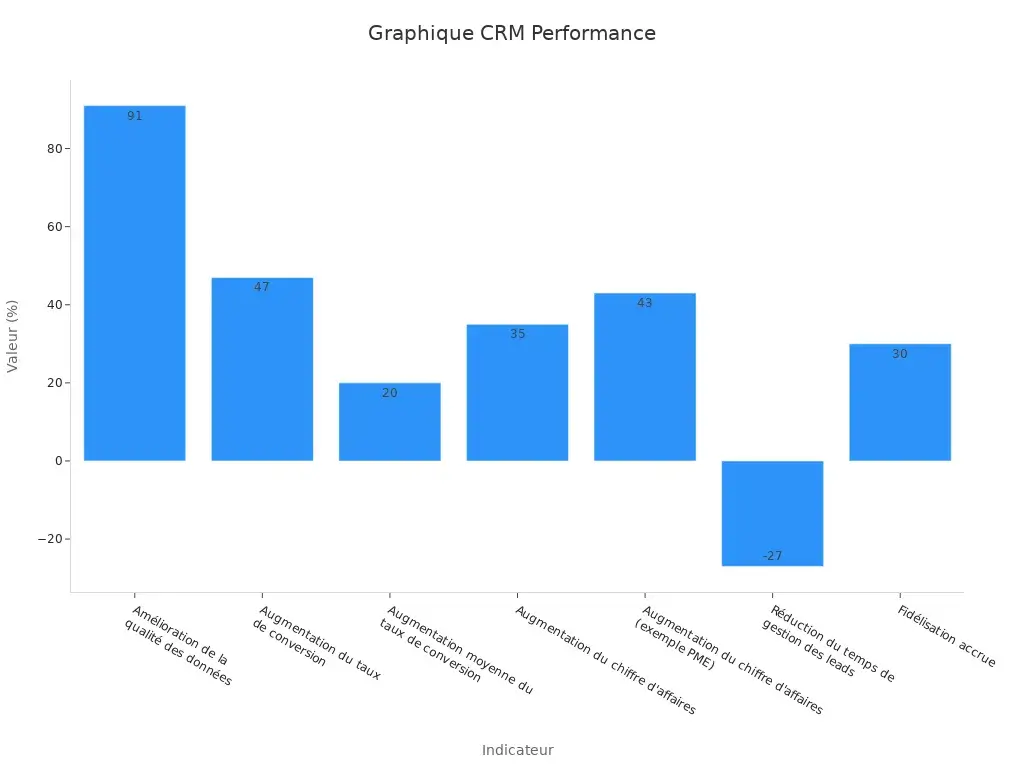
91% of companies that have integrated a CRM report an improvement in the quality of customer data.
According to Nucleus Research, CRM integration can increase conversion rates by up to 47%.
Automating processes via CRM increases conversion rates from 14.5% to 49% depending on the strategies applied.
Indicator | Value / Observed Impact | Source / Concrete example |
|---|---|---|
Data quality improvement | 91% of companies report improved quality | Salesforce Survey |
Increased conversion rate | Up to a 47% increase according to Nucleus Research | Nucleus Research Study |
Average increase in conversion rate | +20% on average for companies using a CRM | Simple CRM Study (800 companies) |
Increase in revenue | +35% on average thanks to effective lead management | Simple CRM Study |
Conversion rate growth (SMEs) | From 12% to 28% | Real-life example: SMEs using Simple CRM |
Increase in turnover (SMEs) | +43 % | Real-life example: SMEs using Simple CRM |
Increased conversion rates through automation | From 14.5% to 49% depending on the strategies applied | Data from marketing automation |
Reduced lead management time | -27% time required | Simple CRM Study |
Increased customer loyalty | +30% customer loyalty | Simple CRM Study |
Integrating alerts into your CRM allows you to receive real-time notifications (via email, Slack, or directly in your dashboard). This enables you to react immediately to every critical signal and automate multi-channel follow-ups (email, SMS, chat) based on the prospect's readiness. This approach improves the personalization of your messages and significantly increases lead conversion.
Note: Companies that combine landing pages, CRM and smart alerts see a 35% increase in qualified lead rates in one quarter and a conversion rate increase of up to 48%.
By automating detection, scoring, and CRM integration, you transform your prospecting. You gain efficiency, reduce errors, and maximize the value of each detected signal.
Security and GDPR compliance
You must ensure data security and comply with GDPR regulations when automating the detection of business opportunities. Your prospects' trust depends on your ability to protect their personal information and remain compliant with the law.
Here's how to proceed step by step:
Identify sensitive data.
Start by listing all the information collected: names, email addresses, job titles, interactions on LinkedIn. Classify this data according to its level of sensitivity.Implement encryption measures.
Use advanced encryption protocols like AES-256 to store and transfer data. This will limit the risk of leaks or hacking.Automate anonymization.
Configure your tool to anonymize non-essential data. For example, hide names or emails in reports if you don't need them for immediate business action.Respects individuals' rights.
Offers each contact the possibility to access, modify, or delete their data. Includes an unsubscribe link in every automated communication.Document your data processing activities
. Keep a precise record of data flows. Note who accesses what, when, and for what purpose. This documentation facilitates audits and proves your compliance.Limit data access.
Assign access rights based on roles within your team. Only authorized members should be able to view or modify sensitive information.Regularly test your security.
Schedule internal audits and vulnerability tests. Update your systems as soon as a vulnerability is detected.
💡 Tip: Magileads integrates encryption, anonymization and access rights management features to help you stay GDPR compliant without technical complexity.
Action to be performed | Recommended tool or method | Main benefit |
|---|---|---|
Data encryption | AES-256, HTTPS | Leak protection |
Automatic anonymization | Magileads integrated function | Respect for privacy |
Access rights management | Magileads Dashboard | Limitation of internal risks |
Treatment documentation | GDPR Register | Proof of conformity |
Security audit | Regular testing, monitoring | Proactive vulnerability detection |
By applying these best practices, you ensure the security of your data and strengthen the trust of your prospects. You transform GDPR compliance into a competitive advantage for your digital prospecting.
Leveraging business signals in prospecting
Personalization of messages
To succeed in your prospecting in 2025, you must personalize each message based on the business signals detected. This personalization goes beyond simply mentioning the prospect's name. You must adapt your approach to the company's specific situation: a change in position, a fundraising round, the adoption of a new technology, or a recent publication.
Here's how to proceed:
Analyze the prospect's context based on the signals collected.
Write a message that refers to the event or the identified need.
Offers a concrete solution, tailored to the current problem.
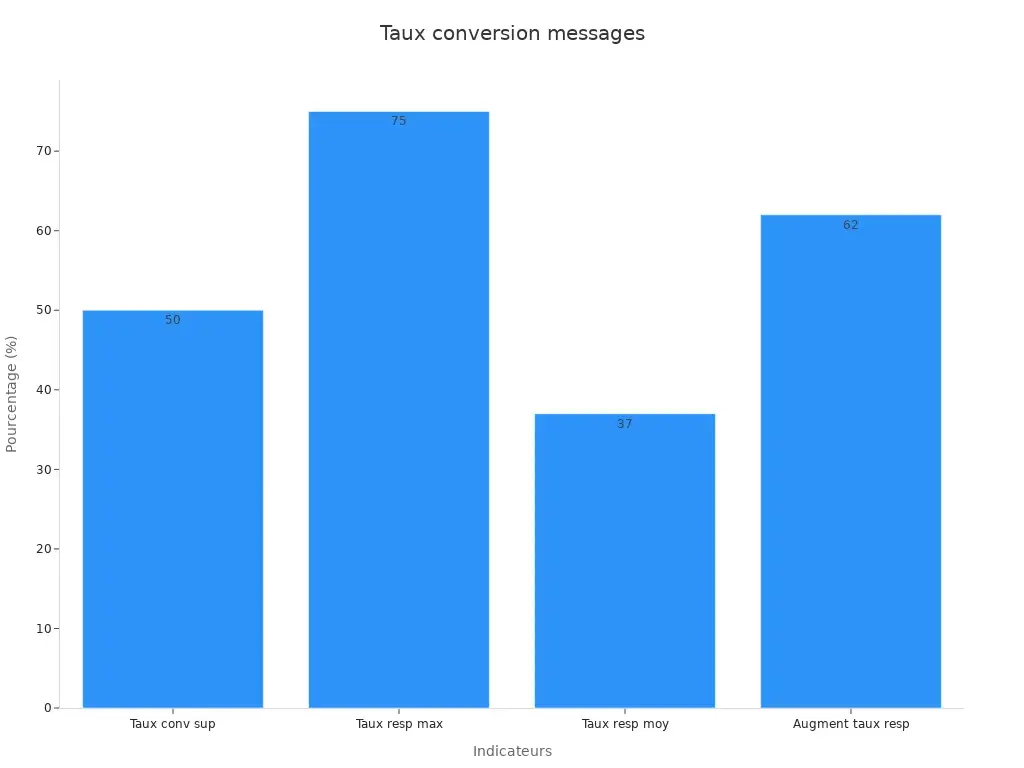
The results of personalization are spectacular. Studies show you can increase your conversion rate by more than 50% compared to a generic approach. Response rates can reach 75% when you base your prospecting on business signals. One independent consultant went from 5 to 32 qualified appointments per month after optimizing his messaging and engagement sequences.
Indicator type | Observed value | Source / Context |
|---|---|---|
Higher conversion rate | +50 % | Harvard University study: Business signal prospecting vs. generic approach |
Maximum response rate | Prospecting based on business signals (LinkedIn study) | |
Average response rate after personalization | 37 % | Case study of an independent consultant after LinkedIn optimization |
Number of qualified appointments per month | From 5-6 to 32 | Independent consultant, before/after personalization and engagement sequence |
Increased response rate with multichannel method (PVC) | +62 % | Comparison of PVC vs. single channel methods |
Appointment rate per salesperson (SoftSolutions) | 22 appointments/month | After training and customization of the sales team |
Sales cycle reduction | 38 % | SoftSolutions team after transformation of the approach |
Increase in average basket size | 27 % | SoftSolutions team after transformation of the approach |
💡 Tip: Use tools like Magileads to automatically generate custom templates based on each detected signal. You save time and increase the relevance of your messages.
Timing and prioritization of leads
The right timing makes all the difference in prospecting. You need to contact your prospects when they are most receptive. To do this, rely on lead scoring and behavioral data analysis.
Here's how to optimize timing and prioritization:
Rank your leads according to their score, based on detected business signals and their recent engagement.
Monitor key KPIs: conversion rate between MQL (Marketing Qualified Lead), SQL (Sales Qualified Lead) and customer , average sales cycle length, campaign open and click rates.
Identify the best times to contact your prospects: day and time of sending , frequency of follow-ups, time of the month or quarter.
Centralize all this data in a tracking table to adjust your strategy in real time.
Here are the indicators to follow for effective prioritization:
MQL → SQL → client conversion rate.
Average length of the sales cycle.
Number of leads scored above a threshold relative to the volume of deals generated.
Open and click-through rates of targeted campaigns.
Average time spent per opportunity before contact was made.
Lead scoring, combined with analysis of past campaigns, allows you to identify hot leads and avoid unnecessary follow-ups. This enables you to adapt your workflows to maximize the impact of each action.
Tip: Regularly recalibrate your scoring criteria to stay aligned with market developments and field feedback.
Automation of responses
Automating responses transforms your ability to quickly convert opportunities. You need to respond to business signals within minutes to maximize your chances of success. Modern tools, like Magileads, allow you to generate personalized and relevant responses as soon as a signal is detected.
Here's how to effectively automate your responses:
Setting up automatic response scenarios for each type of signal (change of position, publication, fundraising).
Uses AI to adapt the tone and content of the message to each situation.
Integrate these responses into your CRM to ensure seamless follow-up.
The figures speak for themselves:
Key indicator | Digital impact on sales conversion |
|---|---|
Average response time | 47 hours (too long for optimal conversion) |
Answer in 1 minute | Up to 391% more conversions |
Response within the hour | 7 times more likely to have a successful conversation |
Quick response | Up to 50% of sales earned |
Call after 30 minutes | 21 times less effective |
82% of consumers | Awaiting a response within 10 minutes |
71% of customers | They buy based on the quality of the customer experience |
Slow response time | 15% increase in the churn rate |
Automation drastically reduces response times. You start the conversation when the prospect is most receptive. You eliminate repetitive tasks and ensure personalized follow-up, even at scale.
Note: Companies that automate their responses see a significant increase in their conversion rate and better customer satisfaction.
Marketing and sales alignment
To fully leverage the potential of your prospecting, you need to align your marketing and sales teams. This alignment creates a synergy that transforms every opportunity into a concrete result. This ensures better lead qualification, smoother communication, and an optimized customer experience.
Here's how you can implement this alignment:
Define common goals.
Set shared objectives between marketing and sales. For example, target the same ideal customer profile and use identical qualification criteria. This avoids misunderstandings and ensures consistency in lead tracking.Harmonize metrics and tools
. Implement a unified dashboard. Track the same performance indicators for both teams. Use a shared CRM to centralize information and monitor the progress of each opportunity. This facilitates transparency and rapid decision-making.Organize regular synchronization points.
Schedule weekly meetings to discuss detected business signals, field feedback, and current priorities. You encourage information sharing and adjust actions in real time.Create collaborative workflows.
Define scenarios where marketing passes qualified leads to sales as soon as a relevant signal is detected. Implement enrichment and nurturing processes to guide prospects through to the sales contact stage.Promote personalization and support.
Use data collected by marketing to personalize sales messages. Offer tailored support at each stage of the sales cycle. You strengthen trust and increase loyalty.
The results of this alignment are measurable and impressive :
You are observing a 47% increase in the average value of contracts.
You improve the customer retention rate by 28%.
You are seeing an 18% increase in revenue with a constant workforce.
You increase the conversion rate of qualified leads by 34%.
You reduce the average sales cycle by 22%.
You improve the Net Promoter Score by 41%.
You generate on average 20% more revenue.
You see an improvement in conversion rates of up to 32% across the entire sales cycle.
You reduce customer acquisition cost by 30%.
You improve the marketing return on investment (ROMI) from 24% to 36%.
You reduce the sales cycle time by 18%.
💡 Tip: Establish a direct communication channel between marketing and sales. Use collaborative tools to share information in real time and react quickly to each new opportunity.
By aligning your teams, you create a virtuous circle. You better qualify your prospects, personalize your actions, and accelerate the conversion of opportunities into loyal customers. This alignment becomes a strategic lever to boost sales performance and guarantee your company's growth.
Best practices and mistakes to avoid
Don't overinterpret business signals
You need to learn to interpret each clue with discernment. A single signal isn't always enough to justify immediate business action. For example, a simple job title change on LinkedIn doesn't necessarily mean an urgent need for new services. Take the time to cross-reference several pieces of information before taking any action. Ask yourself the right questions: Does this signal fit into a broader trend? Is it consistent with other data collected?
Tip: Use analytical tools to check the recurrence and relevance of business signals before committing your resources.
Responsiveness and relevance
Speed of action makes all the difference in modern prospecting. You need to react quickly, but always effectively. Here's how a structured approach can help you:
Observe strategic moves, such as the recruitment of senior profiles after a fundraising round .
Quickly analyze these signals to anticipate needs, for example acquisitions or partnerships.
Creates targeted prospecting lists by identifying other companies in a similar situation.
Tailor your messages by contacting the right people with personalized content, manually adjusted before any automation.
Remember that information ages quickly: a delayed reaction greatly reduces your chances of success.
Tip: Set up automatic alerts so you never miss a key signal and always maintain a personalized approach.
Data quality and reporting
Data quality and accurate reporting are essential for optimizing your prospecting. You must ensure that all information collected is reliable, up-to-date, and actionable. Effective reporting allows you to track your performance and adjust your strategy in real time.
KPI measured | Description | Impact on B2B prospecting |
|---|---|---|
Percentage of calls resulting in an appointment | Improved conversion rate through better qualification | |
Prospect-to-lead conversion rate | Proportion of prospects becoming qualified leads | Optimizing targeting and personalizing approaches |
Customer retention rate | Percentage of loyal customers over a given period | Indirect indicator of prospecting quality and customer satisfaction |
Clear reporting fosters alignment between marketing and sales . You give your teams real-time visibility into their results, which motivates and energizes prospecting. Regular data analysis allows you to anticipate market trends and adjust your offerings.
Precisely identify decision-makers using LinkedIn to reduce sales cycles.
Use a CRM to automate follow-ups and maintain engagement.
Use customer feedback to refine your sales pitch.
Implement a unified process between marketing and sales to maximize conversion.
Note: Reliable data and rigorous reporting transform every action into a measurable opportunity and optimize your business resources.
Measuring the commercial impact
To optimize your prospecting, you need to measure the commercial impact of each action. This approach allows you to identify what works and adjust your strategy in real time. Start by defining clear performance indicators. You can track the number of appointments secured, the lead conversion rate, or the average sales cycle length.
Here's how to proceed step by step:
Identify the right indicators.
Select KPIs adapted to your business: number of opportunities generated, conversion rate, revenue from new customers, or retention rate.Analyze the results regularly.
Set up weekly or monthly reporting. Compare performance before and after integrating the detected business signals into your sales workflows.Use the right tools.
Integrate the data into your CRM to centralize tracking. Platforms like Magileads make it easy to visualize results and automate reports.Adjust your strategy continuously.
If you notice a drop in the conversion rate, analyze the triggering business signals and adapt your messages or prospecting channels.
The figures speak for themselves:
95% of sales opportunities come from clues detected in the business ecosystem.
The volume of actionable business signals has quadrupled in four years, from 67,327 to 300,000, multiplying opportunities for qualified contact.
86% of professionals use this information for telephone prospecting, which improves the relevance of the exchanges.
80% of companies integrate this data into their CRM, which optimizes lead management and accelerates decision-making.
74% of companies see an overall improvement in their sales performance thanks to the use of a CRM.
💡 Tip: Create a simple dashboard to visualize the evolution of your key indicators. Update this dashboard after each campaign to quickly identify trends and adjust your actions.
By rigorously measuring the impact, you transform each detected signal into a growth lever. You gain efficiency, improve the quality of your prospecting, and demonstrate the added value of your approach to your management.
Use cases and concrete examples of business signals

Magileads Use Cases
Want to turn your B2B prospecting into business leads? Discover how companies are using Magileads to detect, score, and convert more effectively. Here are some real-world scenarios that demonstrate the power of automation and intelligent targeting:
Case study | Context | Approach | Key results |
|---|---|---|---|
B2B service company | Customer development in new sectors | Database enrichment, detailed segmentation, personalized email campaigns | +35% conversion rate, +20% email open rate, -25% lead qualification time |
Digital Marketing Agency | Expanding customer base into new sectors | Global database, automated multi-channel prospecting, campaign tracking and optimization | +50% new customers in 6 months, -40% customer acquisition cost, +30% response rate thanks to personalization |
IT services company | Multichannel prospecting (emails, LinkedIn, SMS) | Sequential delivery and multi-channel tracking | +40% response rate in 2 months |
B2B SaaS company | Targeting SMEs in the finance sector | Intelligent targeting algorithms | Doubled conversion rate, reduced effort on irrelevant leads |
Marketing company | Automation of interaction tracking | Tracking of multi-channel responses and interactions, real-time alerts | +15% conversion rate thanks to targeted follow-ups |
You can adapt these workflows to your industry to accelerate lead detection and maximize conversion.
AI message templates
Magileads' AI lets you generate personalized messages that significantly increase response rates. Nearly 29% of salespeople already use AI to write their messages, and 74% see an increase in responses during prospecting calls. Here are some examples of effective templates:
🎯 "Hello {First Name}, congratulations on your new position at {Company}! I would like to propose a discussion to explore how our solutions can support your new challenges."
📈 "Hello {First Name}, I noticed your recent fundraising. We've helped several companies in your sector structure their growth. Would you like a quick call to discuss it?"
🤝 "Hello {First Name}, following your post on {Subject}, I think our expertise could complement each other. Would you be available for a discussion?"
Sector | Increased conversion rate with AI |
|---|---|
Overall | |
E-commerce | +37% |
Saas | +52% |
Financial services | +43% |
Health | +29% |
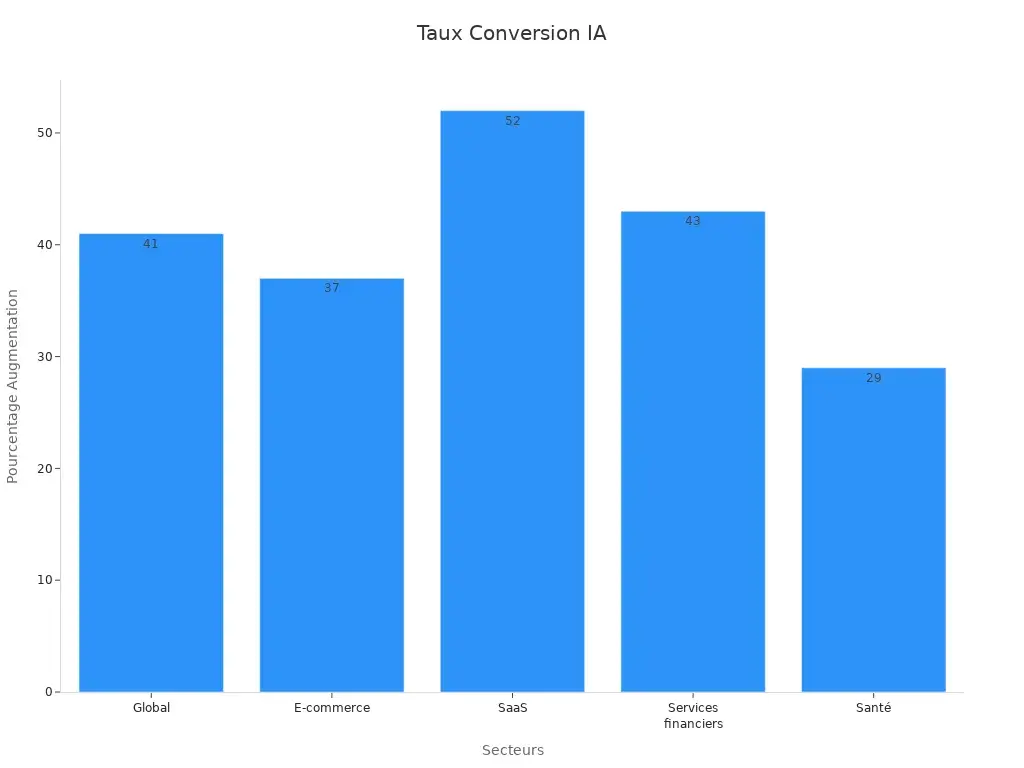
You also see a 29% increase in email open rates and a 41% increase in click-through rates thanks to AI personalization.
Results and ROI
Integrating business signals into your prospecting campaigns generates tangible results. On average, you see a 43% increase in revenue , driven by advanced targeting and enriched real-time data. The use of callbots and behavioral scoring boosts overall performance while strengthening customer relationships.
To guarantee optimal ROI, you need to track key indicators such as contact rate, number of appointments booked, and return on investment. Adjust your strategy based on this data to maintain sustainable and measurable growth.
By adopting Magileads, you transform every detected signal into a business opportunity and gain a head start on your competitors.
Integrating business signals into the business strategy
Culture of vigilance and agility
To remain competitive, you need to establish a genuine culture of monitoring and agility within your company. This approach allows you to anticipate market trends and seize the best opportunities before your competitors. Here's how to structure your monitoring and strengthen your agility:
Implement technological and competitive intelligence . Use methods such as technology mapping, weak business signal detection, and benchmarking to identify emerging trends.
Leverage advanced tools, including artificial intelligence platforms. These solutions analyze large volumes of data (articles, patents) and extract relevant insights to inform your strategy.
Set up an advanced alert system. This will allow you to anticipate threats and seize opportunities more quickly, strengthening the sustainability of your business.
Take inspiration from innovative SMEs. For example, a biotech company detected a suspicious patent application and was able to react immediately to protect its interests.
Encourage an open and curious company culture. This attitude fosters continuous innovation and helps you stay in control of your development.
Tip: Organize regular monitoring meetings with your teams to share findings and adjust your strategy in real time.
Team training
You need to train your teams to master monitoring and analysis tools. Ongoing training ensures that every employee knows how to identify, interpret, and leverage strategic information. Here's how to do it:
Offers practical workshops on the use of artificial intelligence platforms and monitoring tools.
Set up experience-sharing sessions so that everyone can learn from the group's successes and mistakes.
Create simple guides to explain how to react to a detected signal and how to integrate this information into business workflows.
Encourages skills development in data management and GDPR compliance.
Tip: Value individual initiatives and reward employees who identify opportunities through monitoring.
Continuous adaptation
The market is constantly evolving. You must therefore continuously adapt your business strategy. Update your processes as soon as a new trend or regulatory change emerges. Here are some concrete actions:
Regularly analyze the results of your monitoring and adjust your priorities based on the business signals detected.
Re-evaluate your tools and methods every quarter to stay at the forefront of innovation.
Involve your teams in strategic thinking so that they can propose improvements and adjustments.
Measure the impact of each adaptation on your business performance using clear dashboards.
Note: Continuous adaptation allows you to turn every change into an opportunity and strengthen your company's resilience.
To succeed in your prospecting in 2025, you must follow a structured approach:
Detects business signals through precise financial and commercial indicators.
Automate collection and analysis with tools like Magileads , which increases conversion rates by 30% and cuts contact management time in half .
Personalize each action and measure the impact with tailored KPIs.
Indicator | Main use |
|---|---|
Track profitability | |
Self-financing capacity (SFC) | Anticipating financial risks |
Net debt to EBITDA ratio | Assess financial strength |
Investments per employee | Measuring future preparedness |
Embrace agility, adjust your campaigns in real time and share your feedback to continuously improve.
FAQ about business signals
How to quickly detect relevant business signals?
Use a tool like Magileads . Configure filters based on your industry and target audience. Receive real-time alerts as soon as a key event occurs. Analyze the signals in your dashboard to act immediately.
What types of business signals should you prioritize monitoring?
Monitor job changes, fundraising, recruitment, the adoption of new technologies, and strategic publications. These business signals often reveal an immediate need or an openness to new partners.
How to personalize your messages using detected business signals?
Analyze the prospect's context. Mention the identified event or need in your message. Propose a suitable solution. Use AI-generated custom templates to save time and increase relevance.
Is automated prospecting compatible with the GDPR?
Yes, you need to choose tools that encrypt and anonymize data. Magileads complies with the GDPR. You can manage access rights and document each processing activity to ensure compliance.
How do you measure the effectiveness of your prospecting based on business signals?
Track metrics such as conversion rate, number of appointments booked, and response time. Implement regular reporting to adjust your strategy and maximize your return on investment.
Do you always have to act on every business signal detected?
No, analyze the relevance of each signal. Cross-reference several indicators before taking action. Prioritize strong or recurring signals to optimize your resources and avoid unnecessary steps.
What tools can be used to automate the detection of business signals?
Opt for solutions like Magileads . You'll benefit from automated monitoring, intelligent scoring, and CRM integration. These tools facilitate the detection, prioritization, and tracking of business opportunities.
How do you train your teams to exploit business signals?
Organizes practical workshops. Offers simple guides on using tools and analyzing business signals. Encourages the sharing of experience and skills development to strengthen collective effectiveness.
See also
Developing a High-Performing Business Strategy for 2025
The Ultimate Guide to Sales Prospecting in 2024
Fifteen Essential Tools to Revolutionize Your Sales Strategy