Optimize the conversion of your prospects into customers
Lead conversion is the final step in your inbound marketing strategy, but it's not easy. Consumers have more and more ways to research the services or products they're looking for and can easily compare them, making conversion more complex. However, with the right strategies, it's possible to optimize this process. Here are some practical tips for effectively converting your leads.
A reminder about the different categories of leads
A lead represents an individual potentially interested in your company's products or services. This could be someone who has left their email address on your website, subscribed to your newsletter, or filled out a contact form.
There are three types of leads:
- Cold lead : The individual expresses no interest in your service, having visited your site only to inquire.
- Warm lead : This lead has expressed a request regarding a specific product from your company.
- Warm lead : This individual has the necessary budget and demonstrates a near-term purchase intention, with a specific product in mind.
Lead classification is crucial to your sales development strategy. By identifying where each lead is in their buyer's journey, you can optimize your conversion efforts.
1 – Find the key information about prospects becoming customers
To successfully sell your services, it's essential to build a strong relationship with your prospects. One of the best ways to gather relevant information is to observe their interactions with your content. Here are some key insights to collect:
- Geographic location
- E-mail address
- Existence of the company
- Customer identification (professional or individual)
- Matching the demand with your products or services
Regular dialogue with your contacts, whether via email or on LinkedIn, is also crucial. B2B email marketing remains an effective technique for maintaining relationships with your leads. By interacting on LinkedIn, you can also gauge your contacts' readiness to make a purchase.
2 – Record your leads to optimize your conversions
Lead scoring is an effective method for prioritizing your leads based on their buying potential. Some leads will be ready to buy, while others will require more time to develop. Lead scoring helps you identify the most qualified leads , based on information obtained from your marketing database.
This scoring may include:
- Personal information (industry, job type, company size)
- Behaviors (frequency of visits, time spent on your site)
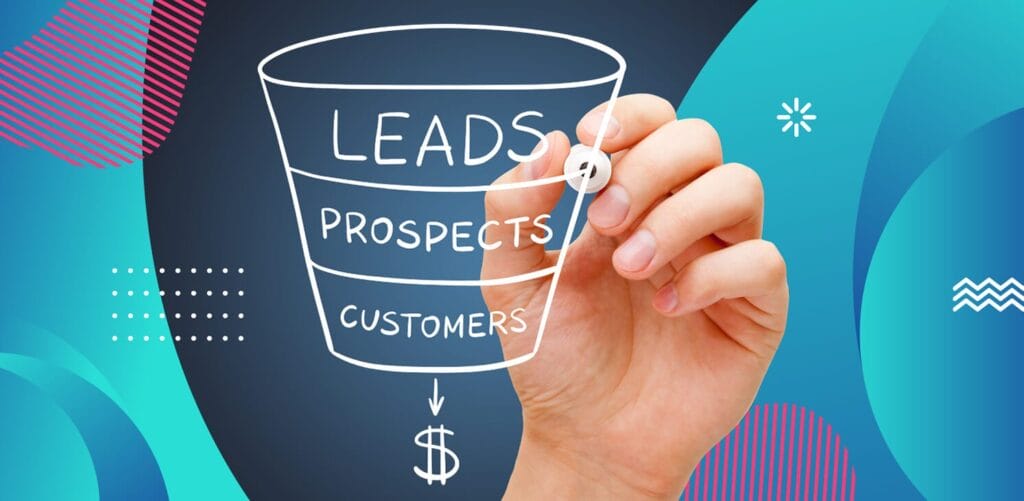
3 – Establish an effective lead nurturing strategy
Lead nurturing aims to encourage your prospects to make a purchase. To do this, it's crucial to present yourself in the best possible light, using psychological triggers and building strong relationships with your prospects . Social selling is a powerful strategy for establishing these relationships.
4 – Your responsiveness: an essential element in converting your prospects into customers
Responsiveness is paramount in both the pre-sales and post-sales phases. The faster you respond to your prospects, the greater your chances of closing a sale. Reducing response time is essential, as many prospects contact several companies before making their choice.
Data shows that responding within 5 minutes of a request can increase your conversion rate by 21 times. Show your prospects that you are attentive to their needs and concerns.
5 – Use a marketing automation platform and convert your prospects into customers
If you can't guarantee optimal responsiveness, consider using marketing automation tools. These tools simplify managing responses and help you ensure you don't miss any opportunities, for example, through email marketing automation.
↗️ Discover in this video how to transform prospects into customers at the next level:
A marketing automation platform automatically collects valuable data and optimizes your campaigns, targeting the right content to the right people. It helps shorten the sales process by providing essential information and effectively segmenting your prospects into customers.
Conclusion on how to convert your prospects into customers
We've presented several methods to optimize the conversion of your prospects into customers. Implementing these strategies, combined with the efficiency of your teams, can significantly improve your conversion rate and boost your company's sales performance. With an approach centered on the needs and behaviors of your prospects, you'll maximize your chances of success in a competitive environment.
Optimize the conversion of your prospects into customers
Expert references and credible studies
Studies and data on converting your prospects into customers
- Bain & Company (2023): “Companies with optimized customer journeys convert 2.5 times more than others” Link Bain & Company
- Harvard Business Review (2024): “Behavioral analytics increases conversion rates by an average of 35%” Link HBR
- Salesforce Research (2024): “73% of customers expect a personalized experience before buying” Salesforce Link
Recognized experts
- Peep Laja (Founder of CXL Institute): “Optimizing conversion rates begins with a deep understanding of pain points” Article by Peep Laja
- Joanna Wiebe (Copyhackers): “Conversion-focused copywriting can triple your conversion rates” Interview with Joanna Wiebe
- Nir Eyal (Author of Hooked): “Customer habits are the ultimate driver of sustainable conversion” Nir Eyal Conference
Direct testimonials on converting your prospects into customers
- “After implementing the MQL/SQL scoring recommended by CXL Institute, our conversion rates jumped 28% in 3 months” – Marc D., Marketing Director at FinTechX
- “A/B testing on our product pages allowed us to identify the right moment for the CTA, increasing our conversions by 19%” – Sophie T., E-commerce Manager @Mode&Co
- “Exit point analysis revealed unsuspected problems in our funnel – correction = +22% sales” – Alexandre P., Founder of SaaSMetrics
- “Dynamic remarketing combined with our CRM data generated 35% more customers at a constant cost” – Laura M., Acquisition Manager @AssurPro
- “Adding social proof at the right time in the customer journey reduced our cart abandonment rate by 40%” – Thomas L., Head of Growth @FoodTechStartup
User experiences on converting your prospects into customers
Experience 1 : A manufacturing SME implemented a qualifying chatbot on its website, reducing conversion time from 14 to 3 days on average.
Experiment 2 : An accounting firm segmented its emails by industry sector, obtaining 27% more qualified appointments.
Experiment 3 : A B2B marketplace optimized its product listings with demo videos, increasing its conversion rate of prospects to customers by 33%.
Experiment 4 : A real estate agency implemented automated SMS messages after viewings, boosting its conversions by 18%.
Experience 5 : A SaaS startup customized its landing pages by traffic source, improving its CPL by 22%.
Stories and anecdotes
Story 1 : Dropbox increased its lead-to-customer conversions by 60% simply by replacing an explainer video with an interactive demo.
Story 2 : An online mattress seller discovered via heatmapping that 80% of customers did not see his CTA – correction = +25% sales.
Story 3 : HubSpot boosted its prospect-to-customer conversions by adding a custom ROI calculator to its funnel.
Story 4 : A company reduced its abandonment rate by 35% by simplifying its form from 11 to 5 fields.
Story 5 : Amazon discovered that displaying a delivery time too early in the process reduced conversions of prospects into customers by 15%.
Strategic segmentation of your prospects into customers
| Type of Segmentation | Concrete Application | Recommended Tool |
|---|---|---|
| Behavioral (B2C) | Targeting based on browsing history and purchase history | Hotjar + Google Analytics |
| Sector-specific (B2B) | Messages adapted by vertical | Clearbit + HubSpot |
| Company size (VSE/SME/Mid-sized company) | Differentiated offers and pathways | LinkedIn Sales Navigator |
| Buying cycle | Content tailored to each stage | Marketo or Pardot |
| Technographic | Adaptation to the tools used by the prospect | BuiltWith + Zapier |
Diagram : [Customer journey] → [Identifying friction points] → [Testing solutions] → [Analyzing results] → [Large-scale deployment]
Questions and Answers to Convert Your Prospects into Clients
Q1: What is the first lever to optimize to improve conversions?
A: The clarity of the offer and its alignment with search intent (80% of failures stem from a mismatch).
Q2: How long does it take to see the results of a CRO optimization?
A: Minimum 4-6 weeks for statistically significant data (except for very large volumes)
Q3: Should A/B testing or qualitative analysis be prioritized?
A: Both are complementary – qualitative analysis identifies problems, while A/B testing identifies solutions
Q4: Which KPI should I prioritize to measure improvement?
A: The overall conversion rate is important, but especially the cost per acquisition and customer lifetime value.
Q5: How to convince management to invest in optimization?
A: Present the potential ROI (every 1% improvement can generate 10-15% additional revenue at constant cost)
Q6: What are the most common mistakes in conversion optimization?
A: 1) Testing without a clear hypothesis 2) Not segmenting results 3) Stopping tests too early 4) Neglecting mobile
Q7: How do I prioritize the elements to test?
A: Use the PIE (Potential, Importance, Ease) or ICE (Impact, Confidence, Ease) framework to classify opportunities
Q8: Are free tools sufficient to get started?
A: Yes (Google Optimize, Hotjar Free), but the paid versions quickly provide added value.
Q9: What testing frequency do you recommend?
A: Ideally, continuous testing, with at least two simultaneous tests at all times.
Q10: How do you integrate CRO into the company culture?
A: 1) Train the teams 2) Share the results 3) Reward successes 4) Include it in the processes
Magileads is a prospecting automation software that allows you to easily manage all the complex aspects of your marketing processes.
Try Magileads free for 14 days. Click here .
Or book a demo to see how it works. Click here .