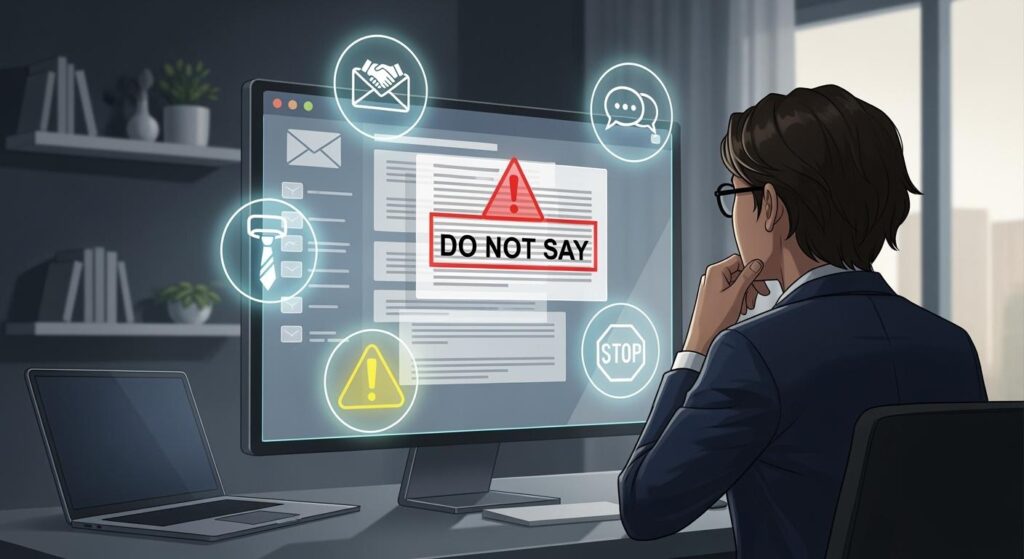

GDPR-compliant lead generation relies on the responsible and compliant collection of personal data. You must understand that every interaction with a prospect entails strict legal obligations. By adhering to these rules, you not only protect your users but also strengthen your company's credibility. Ignoring these requirements can lead to serious consequences, such as fines or a loss of customer trust. Take a proactive approach to ensure your practices comply with current standards.
Key points on lead acquisition and the GDPR
Collecting leads requires complying with laws like the GDPR. This protects people and makes your business more trustworthy.
Ask for clear permission before collecting data. Use simple forms to avoid misunderstandings.
Explain how you collect the data. Tell people how their information will be used and what their rights are.
Protect personal data with security measures. Encrypt important information and grant access only to authorized individuals.
Check frequently to ensure everything is in order. This helps identify problems and resolve them quickly.
The legal basis for GDPR lead generation
Definition and importance of GDPR lead acquisition
A lead represents a person or company that has expressed interest in your products or services. These contacts are a valuable resource for your marketing strategy. You must understand that each lead has the potential to become a customer, but this requires rigorous follow-up and targeted efforts.
The numbers speak for themselves: 7 out of 10 conversions depend on effective follow-up . Yet, only 20% of leads become customers. A Forrester study reveals that optimized lead management can increase the number of leads ready to buy by 50%, while reducing the cost of acquiring them by 33%. This data clearly demonstrates the importance of a well-thought-out strategy to maximize your results.
Key regulations for lead acquisition: GDPR, ePrivacy Law and others
To collect and manage leads legally, you must comply with several regulations. The General Data Protection Regulation (GDPR) is the primary standard in Europe. It imposes strict rules on the collection, processing, and storage of personal data. For example, you must obtain explicit consent before collecting information.
The ePrivacy Regulation, meanwhile, complements the GDPR by focusing on electronic communications. It governs the use of cookies, marketing emails, and SMS messages. Other national regulations may also apply, depending on your location and that of your prospects.
By complying with these laws, you not only protect users' rights but also avoid significant financial penalties. A compliant approach also strengthens your leads' trust in your company, which is essential for successful GDPR lead generation.
Legal obligations in lead generation under the GDPR
Explicit and valid consent
Explicit consent is a fundamental requirement for GDPR-compliant lead generation. You must obtain clear and unambiguous permission before collecting a user's personal data. This means that pre-ticked boxes or vague wording are insufficient. The user must understand precisely what they are consenting to and have the option to refuse without any negative consequences.
💡 Tip : Use simple and clear forms to collect consent. Opt for short and explicit sentences to avoid any confusion.
Companies that adhere to these principles gain a competitive advantage. For example:
Campaigns based on explicit consent show a 27% higher engagement rate compared to those that broaden their theme.
Prospects who have given their initial consent are more likely to interact with your communications.
By respecting this requirement, you strengthen the trust of your leads and improve your marketing performance.
Transparency in data collection for GDPR lead generation
Transparency is another essential pillar. You must clearly inform your prospects about the data collected, its use, and how long it is stored. This information should be accessible from the first contact, for example, through a privacy policy or a cookie banner.
Here are some best practices to ensure transparency:
Explain your intentions : State why you are collecting this data and how it will be used.
Specify user rights : Mention that they can access, modify or delete their information at any time.
Use simple language : Avoid legal jargon so that your prospects can easily understand your approach.
Increased transparency is not just about complying with the law. It also improves your brand image and encourages your leads to engage more with your business.
Securing and managing personal data
Securing personal data is a responsibility you cannot neglect. You must implement technical and organizational measures to protect the information collected against unauthorized access, loss, or leakage.
Here are some concrete actions to adopt for GDPR lead generation:
Encrypt sensitive data to prevent it from being compromised in the event of a cyberattack.
Limit data access to only authorized individuals within your company.
Perform regular backups to prevent accidental data loss.
⚠️ Warning : Poor data management can lead to significant financial penalties and damage your reputation.
By adopting these practices, you show your prospects that you take their privacy seriously. This helps build a lasting relationship of trust, essential for effective and GDPR-compliant lead generation .
Consequences of non-compliance on GDPR lead acquisition
Financial penalties and reputational impact
Failure data collection and management regulations €120,000 . These figures clearly demonstrate the importance of complying with applicable standards.
Beyond financial penalties, non-compliance can severely damage your reputation. A company perceived as negligent in data protection loses customer trust. This can translate into decreased sales and reduced customer loyalty. Conversely, companies that adhere to standards often see an improvement in their brand image. One study revealed that they experience an average 22% increase in revenue thanks to this enhanced credibility.
💡 Note : Investing in compliance is not just a legal obligation. It's also a strategy to protect your business and strengthen your market position.
Concrete examples of GDPR lead acquisition non-compliance
Examples of non-compliance abound across various sectors. These cases illustrate the real consequences of a lack of vigilance. A recent analysis showed that removing online reviews can lead to a 28% in enrollments for the affected training courses. This demonstrates the direct impact of transparency on consumer perception.
In densely populated urban areas, some companies have experienced a drop in visibility of up to 40% following data breaches. This loss of visibility directly impacts their ability to attract new customers. Furthermore, a comparative study revealed that a certification removal can take between six and nine months to regain previous brand awareness. These extended delays hinder growth and increase operational costs.
Regular audits also reveal worrying trends. A three-year analysis showed a 15% increase in non-compliance detected in organizations that had lost more than 50% of their historical opinions. These figures underscore the importance of proactive and compliant data management to avoid negative long-term impacts.
By adopting compliant practices , you can avoid these pitfalls and ensure effective and sustainable GDPR lead generation. Adhering to regulations not only protects your prospects but also strengthens your company's credibility.
Best practices for GDPR-compliant lead generation

Use of compliant management tools
generation tools play a key role in effective lead acquisition. You must choose solutions that adhere to current regulations, such as the GDPR. These tools allow you to centralize the collection, processing, and storage of personal data while ensuring its security.
Here are some essential features to look for:
Consent management : Ensure that the tool allows for the collection and retention of evidence of explicit consent.
Process automation : Opt for solutions that simplify data management, such as automatically sending notifications of privacy policy updates.
Compliance reports : Use tools capable of generating regular audits to verify that your practices comply with regulations.
💡 Tip : Compare several tools before making your choice. Prioritize those that offer an intuitive interface and responsive technical support.
Training teams on regulations
Compliance isn't just about the tools. You also need to train your teams to understand the regulations and apply them correctly. A well-informed team reduces the risk of errors and improves data management.
Here's how to structure an effective training program:
Regular sessions : Organize quarterly workshops to update your employees on legal developments.
Case studies : Present concrete examples of non-compliance to illustrate the possible consequences.
Interactive quizzes : Test your teams' knowledge to identify areas for improvement.
⚠️ Warning : Don't neglect training for new employees. Integrate a compliance module as soon as they arrive.
Regular audits of internal processes
Internal audits are essential to ensure GDPR-compliant lead generation. You must regularly review your practices to identify weaknesses and correct them quickly.
Here are the key steps to an effective audit:
Analysis of collected data : Verify that all information collected complies with the principles of consent and transparency.
Evaluation of tools used : Ensure that your software always complies with the latest regulations.
Detailed report : Document the audit results and propose corrective actions.
💡 Note : Schedule your audits at least once a year. A higher frequency may be necessary if your company processes a large volume of data.
By applying these best practices, you optimize your lead generation while complying with legal requirements. This strengthens the trust of your prospects and protects your business against legal risks.
Adhering to regulations like the GDPR ensures efficient and ethical lead generation. By adopting compliant practices, you protect your prospects' personal data while strengthening your company's credibility. This approach goes beyond simply avoiding penalties; it also improves user trust in your services. By integrating these principles into your strategies, you lay the foundation for sustainable and responsible growth.
Lead generation, GDPR, and legal compliance explained

Expert references and credible studies
GDPR lead generation
Sophie Maréchal, a lawyer specializing in digital law: “The GDPR has complicated the acquisition of GDPR-compliant leads but offers a more secure framework for both businesses and consumers” (Source: Journal du Net)
Professor Alain Dupont, professor of digital marketing at HEC: “The quality of leads now takes precedence over quantity, especially since the new regulations came into effect.”
Dr. Isabelle Lambert, Director of the Digital Compliance Observatory: “Companies often underestimate the legal obligations related to cookies and data collection forms”
Reference studies
CNIL (2023): 43% of French companies are not compliant with the GDPR in their lead generation
HubSpot (2024): Compliant companies see their conversion rates increase by 28%
Gartner (2023): 65% of marketing directors consider legal compliance to be their biggest challenge
Direct testimonies
“By implementing a clear consent process, we reduced our complaints by 75% while improving the quality of our leads” – Marc T., B2B Marketing Manager
“The compliance audit revealed that 30% of our contact database was legally unusable” – Sarah K., DPO of a mid-sized company
“Since we added legal notices to our landing pages, our engagement rate has increased by 40%” – Thomas L., entrepreneur
“Training our sales teams on prospecting rules has eliminated the risk of penalties” – Nadia P., Sales Director
“We had to rethink our entire acquisition strategy after a formal notice from the CNIL” – David R., founder of a tech startup
GDPR lead acquisition
A French SME was fined €80,000 for buying a database without checking its GDPR compliance.
An e-commerce site saw its conversions increase by 25% after simplifying its legal notices and terms of use.
During a surprise audit, the CNIL highlighted the excessively long forms of a major bank, requiring a complete overhaul.
A company avoided a €150,000 fine thanks to its perfectly up-to-date processing register.
A marketer discovered that 60% of his leads were unusable because they were collected without valid consent.
Segmentation of acquisition strategies
Type of company | Specific issues | Solutions adapted |
|---|---|---|
TPE | Limited resources | Ready-to-use legal templates |
SMEs | Large volume of leads | Automation of consent |
ETI | Multiplicity of channels | Centralized management platform |
Startups | Rapid growth | Mandatory quarterly audit |
Large groups | Reputational risk | Unit dedicated to compliance |
GDPR Lead Generation
What are the main legal obligations for GDPR lead generation in France?
The GDPR requires explicit, clear, and affirmative consent. The French Data Protection Act (Loi Informatique et Libertés) governs data retention periods. Commercial prospecting rules differ depending on whether the company is B2B or B2C.
How to verify that a purchased database is compliant?
Request proof of consent, verify the collection date, ensure that the legal notices were compliant at the time of collection, and retain all this evidence.
What are the risks of non-compliance?
Fines of up to 4% of global turnover, reputational damage, and in some cases, criminal penalties.
How to manage requests for the right to be forgotten?
Implement a simple and quick process (maximum delay of 30 days), with traceability of each request.
What tools can automate compliance?
Solutions like OneTrust, Didomi, or specific modules in CRMs like Salesforce or HubSpot.
Is a DPO required to manage GDPR lead acquisition?
Mandatory for public bodies and companies whose core activities require regular and systematic monitoring of individuals on a large scale.
How to train your sales teams?
Organize quarterly sessions, create operational checklists, and appoint GDPR representatives in each team.
What is the legal retention period for leads?
It must be proportionate to the objective: generally 3 years for a prospect, 10 years for a customer (accounting period).
How to prove compliance in the event of an audit?
Keep an up-to-date record of processing activities, archive evidence of consent, and document all procedures.
Are social networks affected by these rules?
Yes, any data collection via social networks must comply with the same obligations, including for leads obtained through advertising.
GDPR Lead Acquisition FAQ
What are the risks if you do not comply with the GDPR?
Failure to comply with the GDPR exposes your company to fines of up to €20 million or 4% of your annual turnover. It can also damage your reputation and lead to a loss of customer trust.
⚠️ Warning : Compliance is essential to avoid these serious consequences.
How to obtain valid consent to collect data?
You must use clear and explicit forms. Pre-checked boxes are prohibited. The user must understand why their data is being collected and have the option to refuse.
💡 Tip : Add an accessible privacy policy to enhance transparency.
What tools can help you comply with regulations?
GDPR-compliant tools, such as Magileads, HubSpot, and Pipedrive, facilitate consent management and data security. They offer auditing and reporting features to ensure compliance.
✅ Note : Compare the options to choose the one that best meets your needs.
How to protect the personal data of your prospects?
Encrypt sensitive data and restrict access to authorized employees. Perform regular backups and use firewalls to prevent cyberattacks.
🔒 Tip : Invest in robust security solutions to prevent breaches.
Why is transparency important in GDPR lead generation?
Transparency strengthens the trust prospects place in your company. By clearly explaining how data is used, you respect their rights and improve your brand image.
🌟 Advantage : Transparent communication increases customer engagement and loyalty.
See also for GDPR lead generation
Strategies for Successfully Attracting Qualified Leads
Essential Process for Obtaining Quality Leads
How to Identify and Acquire Quality Prospects
Magileads: Your Tool for Successful Prospecting