What are the best fonts for an email?
An email consists of HTML code designed to be interpreted and displayed by various email clients such as Gmail, Yahoo Mail, Hotmail, etc. Not all fonts are compatible with these email programs . Therefore, leave your creativity for printed documents. Instead, focus on adhering to standards and aim for simplicity .
Here are some rules to follow to ensure your email is readable.
Choose fonts for a standard .
The concept is not the same for creating your website and your email campaign. Even if you want your content to stand out, not all fancy fonts display correctly in customers .
In the event that the client's email does not support the fonts you have chosen, here are the default fonts used by client emails in most cases: for iCloud Mail Helvetica, for Gmail Arial, for the older version of Microsoft Outlook Calibri and finally for Outlook 2007/2010/2013 Times New Roman.
To ensure your message arrives exactly as you intended, use email fonts compatible with various email clients. You can also use the email fonts directly from the editor's block
Here is a list of the 8 best fonts for secure emails that you can use:
- Arial is the most widely used. It is provided with all versions of Microsoft and by all client emails;
- Helvetica is one of the most widely used. It is easy to read;
- Times New Roman has a traditional look. It is used by default in word processing programs;
- Verdana is designed to be readable on all screens;
- Courier / Courier New is similar to Times New Roman;
- Tahoma is used as the default font for Windows 95, 2000, and XP versions;
- Georgia is supported by email clients;
- Trebuchet MS is a sans-serif typeface. It was designed for reading on screen.
Users spend about ten seconds on their email. That's why your message needs to be readable very quickly.
However, a good font is not enough to make your email readable; other factors are necessary.
Use the right features
Sans Serif font
For a more spacious text, choose a sans-serif font. Your message will be clearer. Sans-serif fonts don't have decorative lines at the end of the characters, making them easier to read on screens because they appear crisp and clean. The most popular sans-serif fonts for emails are Arial, Trebuchet MS , and Helvetica . However, you can use a serif font for headings . The most commonly used serif fonts for emails are Times New Roman and Georgia.
Large handwriting
On average, 16 points is ideal; headings will stand out clearly from the body text at 26 points . To distinguish your signature from the rest of your email, use a smaller size, such as 12 points . However, be careful if you use different fonts in an email, as the sizes will vary.
Hierarchy
Respecting the hierarchy makes your email easier to read. Follow standard formatting rules . Don't hesitate to use headings, subheadings, and spacing between paragraphs and lines. most common line height 22 and 24 points .
Too little space between characters impacts the readability of your email . Times New Roman and Georgia seem to be examples of this. In contrast, the Courier/Courier New offers good character spacing.
The spaces between the different elements of the email are just as important.
and colors for an email
two different fonts for an email (three maximum) will be more than enough to highlight the hierarchies in your message.
The same applies to colors. They must be used judiciously. It is essential that links stand out in your message. It is advisable to use color only to highlight your brand . As a general rule, blue is reserved for emphasizing links . However, you can create links in the color of your logo.
Anchor text and button
To make your link stand out from the rest of your message, use anchor text that is consistent with the link's content. Avoid using a single word for a link; it risks getting lost in your text.
Following the same concept, the buttons have a more interactive design. They are ideal for encouraging your audience to try your products. Make sure the button's color stands out from the rest of your message.
Banner and image
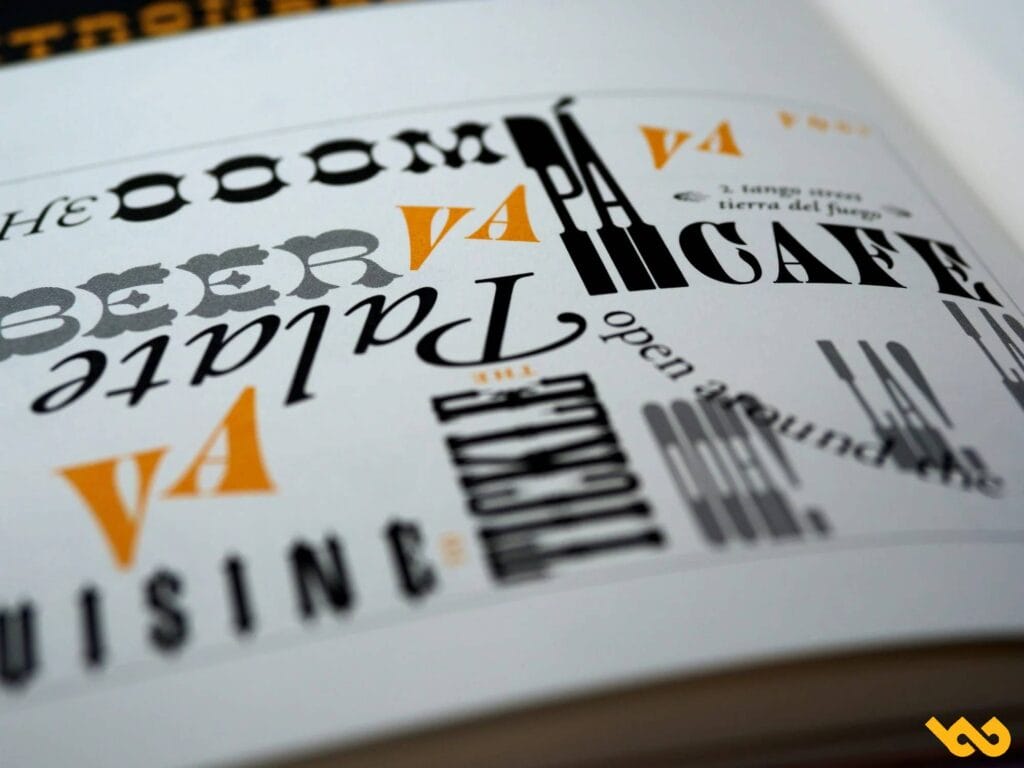
You have complete freedom in designing your email banner and images. You can choose your typography. The most important thing is that it's legible and highlights your brand. However, you should be careful not to make the text too long. The message should encourage the user to continue reading the email.
For images, it is recommended to leave a space before and after for clarity.
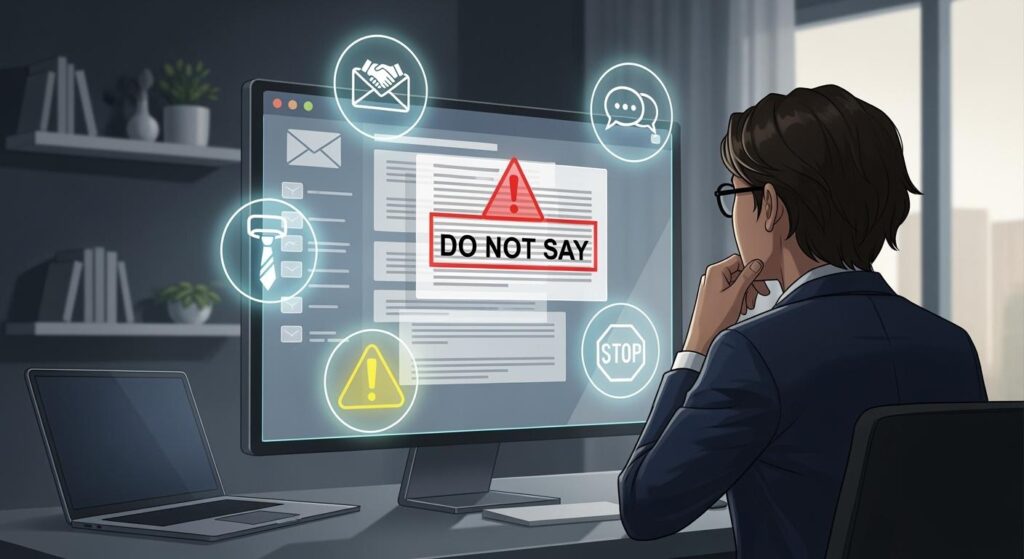
Don't risk using unusual fonts in your email, as the display on your recipient's email client isn't guaranteed. Unsupported fonts will be distorted, potentially resulting in a garbled or even obscured message. Simply ensure that the font you choose reflects the purpose of your content and is appropriate for your business.
🗣 Real-world user experiences with fonts for email
Julie T., CRM manager in the fashion industry
“We had been using Arial for years. We tested Georgia for a special premium campaign: the feedback was clear. The open rate remained stable, but the click-through rate increased by 17%, probably due to better readability on mobile.”
Marc D., founder of a tech newsletter
"After an A/B test between Helvetica and Verdana, Verdana won by a wide margin: easier to read on Outlook and Apple Mail, especially on small screens. Since then, we swear by it for our emails."
Sophie A., freelance B2B copywriter
“I received direct feedback from my clients saying that my emails in Times New Roman looked ‘old-fashioned’. I switched to Open Sans, and the responses are faster. The tone seems more modern.”
Jean-Baptiste M., email marketing agency
"For a luxury client, we used a custom font via image. Result: churn rate doubled. We realized that accessibility and compatibility take precedence over style."
🎓 Expert opinions and data from studies on fonts for email
Litmus (Email Client Market Share Report 2023)
"System fonts like Arial, Helvetica, and Georgia ensure maximum compatibility across more than 90% of email clients, guaranteeing consistent rendering."
Campaign Monitor
"A comparative study shows that sans-serif fonts like Arial, Tahoma, and Verdana improve perceived readability in B2B emails by 10%."
Ann Handley, author of Everybody Writes
"The goal of an email is not to be pretty, but to be read. Choose a font that doesn't stand out. Elegance comes from visual comfort."
Google Fonts / UX Collective
"Fonts like Roboto or Open Sans offer smooth reading on all digital devices. They have become modern standards, even if they are not always natively supported by all email clients."
Magileads is a prospecting automation software that allows you to easily manage all the complex aspects of your marketing processes.
Try Magileads free for 14 days. Click here .
Or book a demo to see how it works. Click here .