Segmenting your prospecting email list is essential for targeted prospecting. This allows you to send relevant messages to each segment of your audience.
Indeed, segmented campaigns can increase your open rates by 203% and your revenue by 760% . This improves the engagement and effectiveness of your email marketing campaigns.
First, identify the relevant segmentation criteria for your audience. Then, use appropriate tools to implement this strategy.
Segmenting prospecting email lists
Understanding email segmentation

To segment your prospecting email list effectively, you first need to understand what email segmentation is. Segmentation involves dividing your subscriber list into smaller groups based on specific criteria. These criteria can include demographics, purchasing behavior, or personal preferences. By segmenting your list, you can send more personalized and relevant messages to each group.
“Indeed, to refine your strategy, segmentation and personalization are essential.” – Email Marketing Expert
This in-depth personalization encourages your prospects to interact more with your company. This allows you to increase engagement and improve the results of your email campaigns.
Why segmentation is crucial for prospecting
Segmentation plays a crucial role in prospecting. It allows you to target your messages more precisely, increasing the chances that your emails will be opened and read. Here are a few reasons why segmentation is essential:
Increased engagement : Segmented emails have a higher open rate. Recipients feel more connected to messages that address their specific needs.
Conversion improvement : By adapting your offers to the needs of each segment, you increase the likelihood of converting your prospects into customers.
Reducing unsubscribes : A relevant message reduces the chances that your subscribers will unsubscribe or mark your emails as spam.
By segmenting your prospecting email list, you optimize your marketing efforts. You send the right message, at the right time, to the right person. This results in more targeted and effective prospecting.
Segmentation criteria

To segment your prospecting email list effectively, choosing the right criteria . These criteria allow you to create homogeneous and relevant groups, making it easier to send personalized messages. Here are the main types of segmentation you can use:
Demographic segmentation
Demographic segmentation is based on characteristics such as age, gender, and location. This information helps you tailor your content to the specific needs of each group.
Age : Preferences often vary according to age groups. For example, young adults may be more receptive to technological offerings, while seniors may prefer health products.
Gender : Campaigns can be tailored to better meet the expectations of men and women. For example, a clothing brand might offer separate collections for each gender.
Location : Geography influences needs and preferences. You can target offers specific to a region, such as local events or seasonal promotions.
Behavioral segmentation
Behavioral segmentation is based on purchase history and previous interactions. It allows you to understand how your prospects interact with your brand.
Purchase history : Identify loyal customers and offer them exclusive deals. For example, a customer who buys regularly can receive special discounts.
Previous interactions : Analyze clicks and email opens to determine engagement. A prospect who frequently interacts with your emails may be interested in more detailed content or premium offers.
Psychographic segmentation
Psychographic segmentation focuses on the interests, values, and lifestyles of your prospects. It helps you create messages that resonate emotionally with your audience.
Target audience : Offer content related to your prospects' passions. For example, a sports enthusiast might appreciate articles on the latest sports trends.
Values : Tailor your messaging to reflect your audience's values. An eco-conscious company can target customers sensitive to environmental issues.
Lifestyle : Understand your prospects' lifestyles to better target them. For example, a luxury brand might appeal to those seeking high-end products.
By using these segmentation criteria, you can segment your prospecting email list more precisely and effectively. This allows you to send relevant and personalized messages, thereby increasing engagement and conversions.
READ ALSO: Understanding and mastering market segmentation in B2B marketing
Implement segmentation
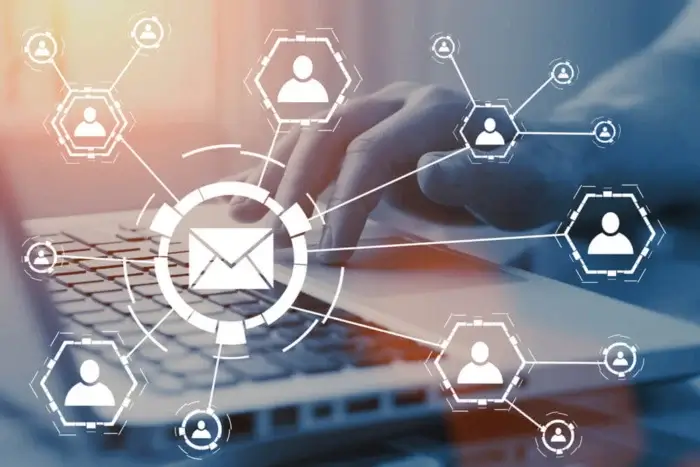
To effectively segment your email lists, you need to use appropriate tools and techniques. These tools help you organize your contacts into homogeneous groups, making it easier to send personalized and relevant messages.
Segmentation tools and techniques
Use of CRM software
CRM (Customer Relationship Management) software is essential for successful segmentation. It allows you to collect and analyze data about your contacts, such as their past interactions, preferences, and purchasing behavior. Here's how you can use it:
Data collection : Record all interactions with your prospects and customers. This includes emails opened, links clicked, and purchases made.
Behavioral analysis : Identify recurring trends and behaviors among your contacts. For example, a customer who regularly buys similar products can be targeted with personalized offers.
Creating segments : Use the collected data to create segments based on specific criteria. This allows you to send tailored messages to each group.
Integration with email marketing platforms
Integrating your CRM with email marketing platforms optimizes your segmentation strategy. These platforms facilitate sending targeted and automated campaigns. Here are some advantages:
Campaign automation : Schedule email sending based on your contacts' actions. For example, a welcome email can be automatically sent to a new subscriber.
Message personalization : Tailor the content of your emails based on segments. Use dynamic variables to insert the recipient's name or product recommendations.
Performance tracking : Analyze your campaign results to adjust your segments and improve the effectiveness of your emails.
Magileads segmentation features
Magileads offers advanced features for accurately and efficiently segmenting your email lists. Here's how you can leverage this tool:
How to use Magileads to segment your lists
Segmentation criteria : Create segments based on criteria such as industry , company size, or location. This allows you to target your messages more precisely.
Advanced personalization : Use the Spintax feature to personalize your messages without manually writing each email. This saves you time while increasing the relevance of your communications.
Specific advantages of Magileads
Precise segmentation : Thanks to accurate segmentation , you can target your messages and increase their relevance. This improves engagement and conversion rates.
Advanced options : Magileads allows you to create segments based on specific behaviors , such as previous purchases or interactions with your website. This helps you better understand your prospects and tailor your campaigns accordingly.
↗️ Discover in this video how Magileads can take your agency to the next level:
By using these tools and techniques, you can implement an effective segmentation strategy. This allows you to send personalized messages to each segment, thereby increasing engagement and conversions in your email campaigns.
Practical examples of successful segmentation
Segmenting your prospecting emails can transform your marketing campaigns into resounding successes. By tailoring your messages to the specific needs of each segment, you significantly increase engagement and conversions. Here are some concrete examples of segmented campaigns that have paid off.
Case studies of segmented campaigns
Fashion e-commerce : An online clothing store segmented its customers based on their purchase history and frequency. Loyal customers received exclusive offers and early access to new collections. The result: a 30% increase in monthly sales.
SaaS (Software as a Service) : A software provider used behavioral segmentation to target inactive users with tutorials and user guides. This approach reactivated 20% of inactive users, thus increasing the retention rate.
Health and wellness sector : A wellness brand segmented its subscribers based on their lifestyle. Active subscribers received fitness tips, while those interested in mindfulness received relaxation techniques. This personalization led to a 40% increase in email open rates.
Results obtained through effective segmentation

Segmenting prospecting emails isn't just about increasing sales. It also improves customer experience and strengthens brand loyalty. Here are some concrete results achieved through effective segmentation:
Increased open rates : Segmented campaigns can increase your open rates by 203% . Recipients feel more engaged with messages that address their specific needs.
Revenue growth : Marketers using segmented campaigns see a 760% in revenue. By tailoring your offers to the needs of each segment, you maximize your conversion rates.
Reduced unsubscribes : A relevant message reduces the chances that your subscribers will unsubscribe or mark your emails as spam. This helps you maintain an engaged and receptive contact base.
By applying these segmentation strategies, you can transform your prospecting email campaigns into genuine growth drivers. You deliver the right message, at the right time, to the right person, resulting in more targeted and effective prospecting.
Tips for optimizing segmentation
Optimizing your email list segmentation is essential to maximizing the effectiveness of your prospecting campaigns. Here are some practical tips to help you refine your strategy.
Best practices for continuous segmentation
Update your segments regularly : Your prospects' preferences and behaviors evolve. Be sure to review and adjust your segments regularly to keep them relevant. For example, if a customer changes location, adapt your geographic segment accordingly.
Use keywords to refine segmentation JouéClub did , integrate specific keywords to target particular brands or product categories. This allows you to precisely define the interests of each segment and deliver more targeted messages.
Test and analyze your segments : Conduct A/B tests to evaluate the effectiveness of your segments. Analyze the results to identify the segments that generate the most engagement and conversions. Adjust your segmentation criteria based on the data collected.
Integrate segmentation into your platform : Ensure your email marketing platform or CRM includes advanced segmentation features. This facilitates the management and continuous optimization of your segments.
Avoid common errors in segmentation
Don't over-segment : Excessive segmentation can complicate campaign management. Find a balance between segment granularity and ease of management. Too many segments can dilute your efforts and make your campaigns less effective.
Avoid segments based on outdated data : Always use up-to-date data to create your segments. Outdated information can lead to inappropriate messaging and decreased engagement.
Don't neglect results analysis : Don't just segment your lists. Regularly analyze the performance of your segments to identify opportunities for improvement. Open, click-through, and conversion rates are key indicators to track.
Don't underestimate the importance of personalization : Even with effective segmentation, personalization remains crucial. Tailor the content of your emails to the specific characteristics of each segment to maximize the impact of your messages.
By following these tips, you can optimize the segmentation of your prospecting email lists. This will allow you to send more relevant and personalized messages, thereby increasing engagement and conversions in your campaigns.
Email segmentation proves to be a powerful tool for optimizing your prospecting campaigns. By dividing your audience into homogeneous subsets , you can create more relevant messages tailored to each recipient. This significantly increases your Return on Investment (ROI) by personalizing your communications.
Apply these techniques to improve your results and boost prospect engagement. Explore Magileads for even more precise and effective segmentation. You'll discover how to transform your prospecting email campaigns into true growth drivers.
—————————
Magileads is a prospecting automation software that allows you to easily manage all the complex aspects of your marketing processes.
Try Magileads free for 14 days. Click here .
Or book a demo to see how it works. Click here .
See also
Top 10 Email Marketing Tools for Prospecting in 2024
Choosing Between Email or LinkedIn for B2B Prospecting
Essential Process for Generating Qualified Leads