Since the advent of the web, buyer behavior has changed. They now consult a significant amount of information before making a purchase decision. It is essential to adapt marketing strategies to this change. This digital strategy is known as "inbound marketing ." This concept originated in the United States. But how, in practical terms, can you conduct an effective inbound marketing campaign?
What is inbound marketing?
Perhaps you've noticed that almost all businesses produce web content? Their goal is to gain visibility and, incidentally, generate more sales. This is the technique of inbound marketing .
Inbound marketing is a strategy that involves attracting leads by creating targeted content . High-quality content can directly influence a user's purchasing behavior. However, sometimes it's necessary to nurture a relationship with the customer after this initial contact, using marketing automation or lead nurturing to guide them further through the buying process.
The term inbound marketing was first used in 2006 by HubSpot co-founders Brian Halligan and Dharmesh Shah . They observed that the traffic generated by their startup's blog easily converted into purchases.
Why do inbound marketing?
With the democratization of the internet, consumers are making their purchasing decisions independently by leveraging the resources available to them online. Furthermore, statistics related to inbound marketing show that prospects complete 57% of the process online before contacting a company salesperson.
What is the difference between inbound marketing and outbound marketing?
Inbound marketing differs from outbound marketing , which relies on using untargeted advertising aimed at a mass audience. Consequently, the budget is generally higher, and the return on investment is not always profitable. Indeed, advertising space is quite expensive. Furthermore, this method is not very popular with consumers, who often find it intrusive.
Inbound marketing emphasizes personalizing the customer experience by providing content that answers their questions. It's a systemic approach based on customer needs. It captures consumer interest by offering information that aligns with their requirements . In this way, the customer chooses to learn more about the brand. You then obtain a qualified audience. In terms of cost, inbound marketing is significantly lower. The impact is most noticeable with long-tail keywords . This strategy is suitable for both B2B and B2C and generates long-term interest .
READ ALSO: A complete guide to developing an effective marketing plan and achieving your goals
What are the steps to follow to succeed with your inbound marketing strategy?
To implement an inbound marketing , you need to consider four essential elements : defining your buyer personas , producing quality content , optimizing your website , and applying marketing automation . You should then follow a few steps:
- Define your buyer personas ; this will allow you to position your message and create content that aligns with your audience's expectations . Identify your buyer personas based on all available market data, your existing customers, and the user journey on your website. A buyer persona is a fictional representation of a company's ideal customer.
- Producing high-quality content increases your visibility and demonstrates your expertise. Customers conduct preliminary online research to gather information, so you need to publish on various channels : website, social media, blog , etc. These are essential tools.
- Optimizing your website , which is the showcase of your business, generates traffic and leads . Your content must be optimized in both substance and form. It needs to be dynamic and optimized with SEO principles.
- Implementing marketing automation marketing automation software options are available online more responsive to your audience .
Inbound marketing isn't suitable for impulse purchases. It requires a long, multi-phase process. To implement this marketing strategy, you need to complete these four steps.
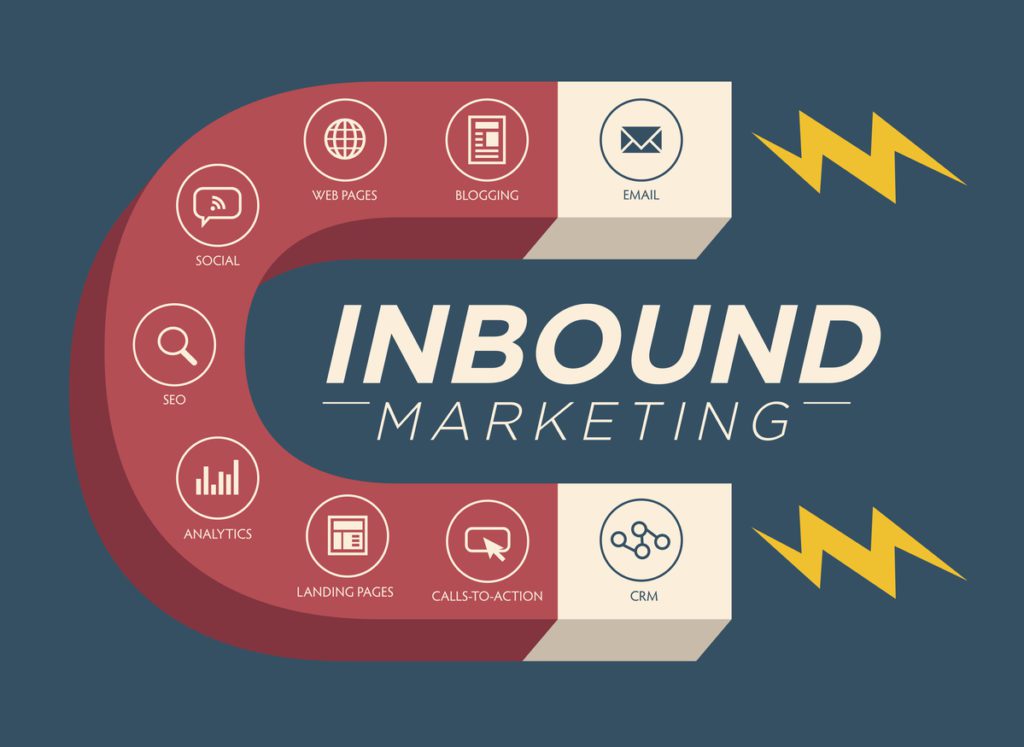
Building a qualified audience
This is the first step: using all available channels to attract a qualified audience . Producing optimized, high-quality content allows your company to become its own media outlet. In this step, the content should address a general issue in order to answer a specific question.
Converting visitors into prospects
The goal of this second step is to convert visitors into qualified leads by presenting:
- forms,
- links,
- calls-to-action (CTAs) on your content pages.
The goal is to gather information about your visitors. Naturally, the content must present the best solution to the visitor's problem.
Converting prospects into customers
This third step involves guiding prospects through the buying process. It can also be called lead nurturing . Several methods can be combined for this step: phone calls, newsletters, marketing automation , appointment scheduling, etc. During this phase, you must offer relevant solutions to trigger the purchase.
Customer loyalty
impeccable products and to guarantee customer satisfaction . Consumers communicate with each other through social media and forums. A satisfied customer will become your ambassador . Word-of-mouth and recommendations are decisive factors for consumers in general, and for internet users in particular.
In summary, inbound marketing is the digital strategy best suited to the modern consumer's buying journey. The approach is relatively simple, but may sometimes require the help of a specialized agency.
—————————
Magileads is a prospecting automation software that allows you to easily manage all the complex aspects of your marketing processes.
Try Magileads free for 14 days. Click here .
Or book a demo to see how it works. Click here .