Decision-makers now juggle an average of 121 emails per day. As a result, standing out is increasingly difficult. Between ringing phones, notifications, and endless Slack conversations, how can you ensure your message sticks in your recipient's mind?
That's why it's crucial to design your B2B email to be as engaging and impactful as possible.
The goal is to stay top of mind with your recipient and increase the chances they'll click the "Reply" . But what distinguishes a good B2B email?
The 3 fundamental keys to a good prospecting email
1 – Personalization
Personalized messages, based on job titles, pain points , and LinkedIn activity , have a significant impact. Personalization can increase response rates by up to 142% . You need a tailored message that highlights your recipient and makes them feel like they're your sole point of contact. You can use standard email templates, but the key is to personalize them.
2 – Useful content
Before asking for anything in return, provide value . As Dr. Robert B. Cialdini points out in "Influence: The Psychology of Persuasion ," giving something first encourages reciprocity . Provide helpful resources, answer difficult questions, and share insights that demonstrate your industry expertise.
3 – A simple design and structure
A simple structure captures the attention of busy recipients. Make their lives easier by ensuring your emails are easy to scan. Use standard fonts and avoid long blocks of text. Include links to relevant content and ensure your emails are optimized for both mobile and desktop devices. The less cognitive load for the reader, the better your prospecting .
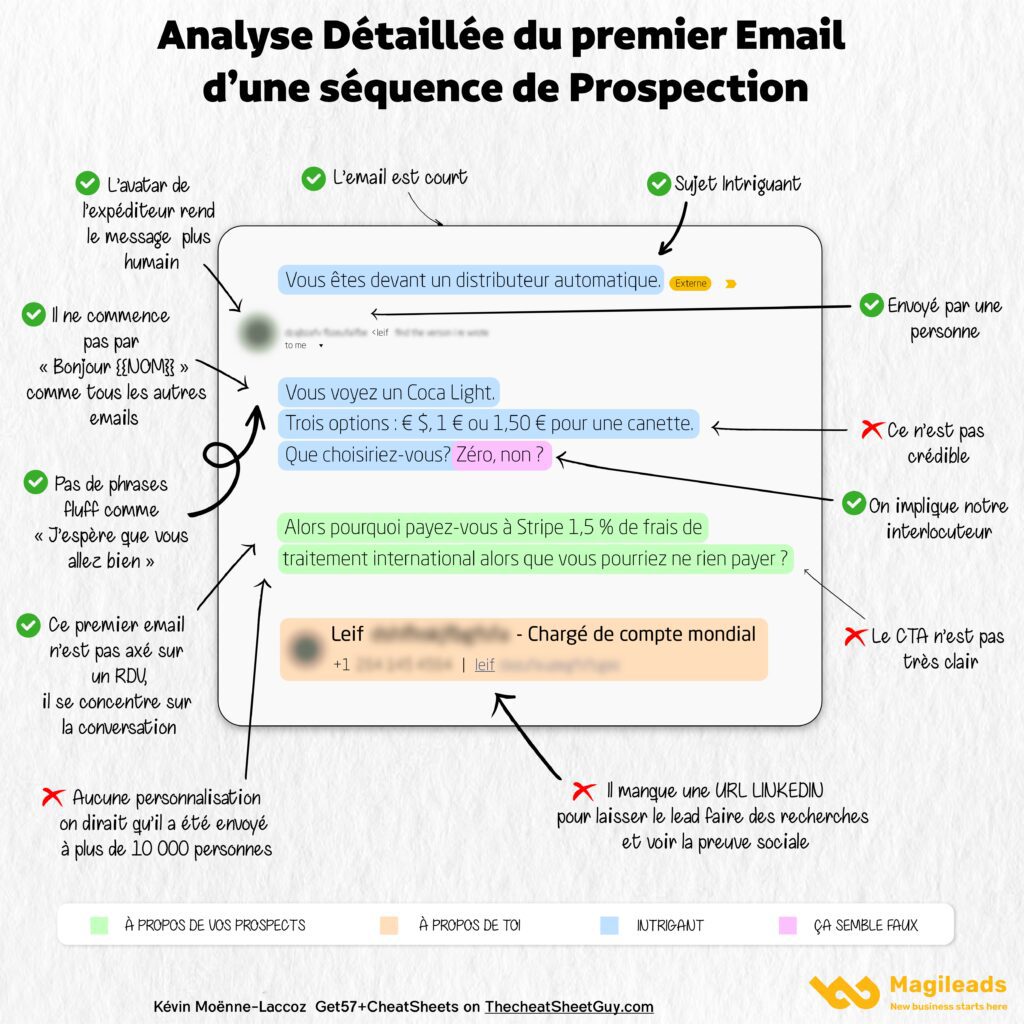
Here is an example of email marketing. The graphic shows you exactly what to do and the mistakes to avoid .
READ ALSO: B2B Email: Why place an order with a supplier by email
How to write a B2B email sequence that converts?
You've grasped the concepts of personalization, usefulness, and simplicity. But how exactly do you write the sequence to optimize it for conversion? Here are 6 best practices to help you refine it.
1 – Create an eye-catching object
The first thing your recipient sees is the subject line. It needs to resonate and encourage them to read more. Use personalized , engaging subject lines, and if possible, include a number. Subject lines with numbers have an open rate of 57% , so use them wisely.
2 – Make the first line a statement about them
Establish relevance from the very first line by focusing on your recipient rather than yourself. Mention their credentials, appreciate a recent LinkedIn , or refer to a recent public appearance. This shows that you've done your research and that you know them .
3 – Remain conversational
Use informal language to create a conversational atmosphere. corporate jargon “You probably have to deal with…” or “I’m sure you’re familiar with…” .
4 – Use storytelling
Create a story that resonates with your audience. People remember stories much better than facts and figures . Tell a story around the solution you have to offer, highlighting case studies or success stories.
5 – Include a call to action (CTA)
End with a clear and concise CTA . Clearly state the next step you want your recipient to take. Keep it brief and focus on the benefits for your prospect .
6 – Add a signature
Create a personalized email signature with your contact information and links to your website and social media . This encourages your recipient to learn more about you and your product, thus enhancing your reputation .