
En 2025, tu dois saisir l’importance des signaux d’affaires pour transformer ta prospection B2B.
Une levée de fonds, un partenariat stratégique ou le lancement d’un nouveau produit ouvrent la voie à de nouvelles opportunités.
Le timing reste décisif : agir au bon moment maximise tes chances de succès.
Tu bénéficies aujourd’hui d’outils avancés comme Magileads. Grâce à l’IA, l’automatisation et le scoring prédictif, tu peux :
Identifier les leads les plus prometteurs avec 85 % de précision en plus.
Gagner jusqu’à 15 heures par semaine sur tes tâches de prospection.
Améliorer ton taux d’engagement de 45 % grâce à la personnalisation.
Type d’entreprise | Outil IA utilisé | Résultat mesuré |
|---|---|---|
IA générative, Domo | Augmentation du chiffre d’affaires | |
Centre médical | Voicebot IA spécialisé | Gestion des rendez-vous optimisée |
Artisan dératiseur | Appel automatisé IA | Prospection facilitée, gain de temps |
Adopte une démarche proactive et personnalisée pour exploiter chaque signal détecté et booster tes conversions.
Points Clés sur les signaux d’affaires
Les signaux d’affaires sont des indices concrets qui révèlent des opportunités commerciales à saisir rapidement.
Utilise des outils comme Magileads pour automatiser la détection, le scoring et la gestion des signaux d’affaires.
Personnalise tes messages en fonction des signaux d’affaires
détectés pour augmenter fortement ton taux de conversion.Priorise tes leads grâce à un scoring intelligent basé sur l’IA pour concentrer tes efforts sur les prospects les plus prometteurs.
Intègre les signaux d’affaires dans ton CRM pour recevoir des alertes en temps réel et automatiser les actions commerciales.
Respecte la sécurité des données et la conformité RGPD pour renforcer la confiance de tes prospects.
Aligne les équipes marketing et ventes pour améliorer la qualification des leads et accélérer la transformation commerciale.
Mesure régulièrement l’impact de ta prospection avec des indicateurs clairs pour ajuster ta stratégie et maximiser ton ROI.
Signaux d’affaires : définition et enjeux
Définition des signaux d’affaires
Tu dois comprendre ce qu’est les signaux d’affaires pour réussir ta prospection en 2025. Un signal d’affaires représente un indice concret, détectable dans l’écosystème d’une entreprise, qui indique un changement, un besoin ou une opportunité commerciale. Ces signaux d’affaires proviennent de différentes sources et se manifestent sous plusieurs formes. Voici les éléments factuels qui définissent un signal d’affaires dans le contexte B2B actuel :
Données firmographiques : informations sur le secteur, la taille, la localisation ou la santé financière d’une entreprise.
Signaux technographiques : adoption ou changement de technologies, comme l’intégration d’un nouveau CRM.
Signaux basés sur des événements : actualités telles qu’une levée de fonds, un recrutement massif ou l’ouverture d’un nouveau bureau.
Signaux basés sur des actions : comportements observés, comme une visite sur ton site, une interaction sur LinkedIn ou la participation à un webinaire.
Fraîcheur des données : tu dois agir vite, car un signal obsolète perd toute sa valeur.
Astuce : Utilise une solution comme Magileads pour centraliser et actualiser ces signaux en temps réel.
Types de signaux d’affaires à surveiller
Pour maximiser tes chances de conversion, tu dois surveiller plusieurs types de signaux d’affaires :
Changement de poste
Quand un décideur change de fonction ou rejoint une nouvelle entreprise, il revoit souvent ses fournisseurs et ses outils. Ce moment crée une ouverture idéale pour proposer tes services.
Levée de fonds
Une entreprise qui lève des fonds cherche à accélérer sa croissance. Elle investit dans de nouveaux outils, recrute et s’ouvre à de nouveaux partenaires.
Croissance et recrutement
Une vague de recrutements ou une annonce de croissance signale un besoin d’accompagnement, de solutions RH ou d’outils pour soutenir l’expansion.
Adoption de technologies
L’intégration d’une nouvelle technologie (CRM, marketing automation) révèle une volonté d’optimiser les processus. Tu peux alors proposer des solutions complémentaires.
Publications et interactions
Les publications sur LinkedIn, les articles de blog ou les interactions sur les réseaux sociaux montrent l’intérêt d’une entreprise pour certains sujets. Analyse ces signaux d’affaires pour personnaliser ton approche.
Enjeux pour la prospection B2B
En 2025, la détection des signaux d’affaires devient essentielle pour trois raisons majeures :
Timing : Tu contactes le prospect au moment où il est le plus réceptif.
Personnalisation : Tu adaptes ton message en fonction du contexte réel de l’entreprise.
ROI : Tu concentres tes efforts sur les leads à fort potentiel, ce qui augmente ton taux de conversion.
Les études récentes montrent que la surveillance des signaux d’affaires digitaux, transactionnels et comportementaux améliore la segmentation et triple la génération de rendez-vous qualifiés. L’utilisation d’un scoring intelligent basé sur l’IA, comme celui de Magileads, te permet d’identifier les meilleurs leads avec 85 % de précision et d’optimiser le moment de prise de contact. Tu gagnes ainsi en efficacité et tu augmentes la rétention client jusqu’à 40 %.
Conseil : Automatise la détection et le scoring des signaux d’affaires pour doubler ta productivité et générer plus d’opportunités commerciales.
Sources et canaux de signaux d’affaires

Réseaux sociaux professionnels
Tu veux détecter les meilleures opportunités ? Commence par surveiller les réseaux sociaux professionnels comme LinkedIn. Ces plateformes regroupent la majorité des décideurs B2B. Selon le Baromètre Social Selling France 2020, 85 % des décideurs utilisent LinkedIn dans leur activité, 45 % ont déjà répondu à une sollicitation commerciale, et 20 % ont concrétisé un achat après une prise de contact sur ces réseaux. Tu peux donc y repérer des changements de poste, des annonces de recrutement ou des publications stratégiques.
Pour exploiter ces canaux efficacement :
Mets en place une veille quotidienne sur les profils et pages d’entreprise.
Analyse les interactions (likes, commentaires, partages) pour identifier les sujets qui intéressent tes prospects.
Utilise des outils comme Magileads pour automatiser la détection des signaux d’affaires et recevoir des alertes en temps réel.
Astuce : Publie régulièrement du contenu à forte valeur ajoutée et interagis avec ta communauté pour générer des signaux d’affaires d’intérêt et renforcer ta crédibilité.
Les réseaux sociaux professionnels ne servent pas seulement à communiquer. Ils te permettent d’identifier des leads, de suivre l’actualité de tes cibles et de détecter des événements clés comme une fusion ou un changement de direction. Cette approche multi-sources, actualisée en temps réel, fait de ces plateformes un levier incontournable pour ta prospection.
Bases de données et veille sectorielle
Pour aller plus loin, tu dois t’appuyer sur des bases de données fiables et une veille sectorielle structurée. Le Registre National des Entreprises (RNE) et les bases comme Sirene te donnent accès à des informations actualisées sur la vie des sociétés : créations, radiations, changements de dirigeants, bilans financiers.
Voici comment optimiser ta veille de signaux d’affaires :
Connecte-toi à des API (comme Sirene) pour automatiser la collecte des données.
Crée un tableau de bord avec des indicateurs sectoriels et des alertes personnalisées.
Croise les données juridiques, financières et opérationnelles pour détecter des signaux d’affaire
faibles.
L’automatisation et l’analyse de ces données, combinées à l’intelligence artificielle, te permettent d’anticiper les mouvements du marché. Tu gagnes en réactivité et tu cibles les entreprises au bon moment. La collaboration entre les équipes commerciales, juridiques et financières renforce la pertinence de tes analyses et la fiabilité des signaux d’affaires détectés.
Outils de scraping et enrichissement
Tu veux gagner du temps et ne rien rater ? Utilise des outils de scraping pour extraire automatiquement les informations publiques sur tes prospects. Ces solutions collectent des données sur les sites web, les réseaux sociaux ou les annuaires professionnels. Tu peux ainsi enrichir tes fiches prospects avec des informations à jour : technologies utilisées, recrutements récents, actualités marquantes.
Pour mettre en place une stratégie efficace :
Sélectionne des outils compatibles avec la RGPD et capables de filtrer les données pertinentes.
Paramètre des scénarios de scraping pour surveiller les changements importants (nouveaux établissements, levées de fonds, nominations).
Intègre ces données dans ton CRM pour centraliser l’information et déclencher des actions automatiques.
Conseil : Combine le scraping avec des solutions d’enrichissement comme Magileads pour obtenir une vision complète et prioriser tes actions commerciales.
En utilisant ces trois canaux, tu multiplies tes chances de détecter des signaux d’affaires pertinents et d’agir avant tes concurrents.
Actualités et publications d’entreprise
Pour détecter des opportunités commerciales en 2025, tu dois surveiller de près l’actualité et les publications des entreprises ciblées. Ces sources t’offrent des informations précieuses sur les projets, les priorités et les changements stratégiques de tes prospects. Tu peux ainsi anticiper leurs besoins et adapter ta prospection.
Voici comment exploiter efficacement ces sources :
Identifie les canaux d’information clés
Consulte régulièrement les sites officiels des entreprises, les communiqués de presse, les blogs d’entreprise et les newsletters. Analyse aussi les articles publiés dans la presse spécialisée ou sur des plateformes sectorielles.Mets en place une veille automatisée
Utilise des outils de veille pour recevoir des alertes dès qu’une entreprise publie une nouvelle information. Magileads te permet de centraliser ces actualités et de les relier à tes fiches prospects. Tu gagnes du temps et tu ne rates aucun signal important.Analyse le contenu des publications
Repère les annonces de nouveaux produits, les partenariats stratégiques, les nominations ou les résultats financiers. Ces événements révèlent souvent des besoins d’accompagnement, de nouveaux budgets ou des changements de priorités.Croise les informations
Compare les actualités d’une entreprise avec les tendances du secteur. Si plusieurs acteurs annoncent des investissements dans une technologie, tu peux proposer des solutions complémentaires ou des services adaptés.Personnalise ta prise de contact
Lorsque tu détectes un signal d’affaires dans une publication, mentionne-le dans ton message. Tu montres ainsi que tu comprends le contexte et que tu proposes une solution pertinente.
Astuce : Crée un tableau de suivi pour noter les actualités marquantes de chaque prospect. Tu pourras ainsi prioriser tes actions et adapter tes messages en fonction des signaux d’affaires détectés.
Source d’actualité | Type d’information détectée | Action recommandée |
|---|---|---|
Communiqué de presse | Lancement de produit | Proposer une offre de partenariat |
Blog d’entreprise | Adoption d’une nouvelle technologie | Présenter une solution connexe |
Article sectoriel | Croissance ou levée de fonds | Offrir un accompagnement ciblé |
En suivant ces étapes, tu transformes l’information en avantage concurrentiel. Tu détectes les signaux d’affaires au bon moment et tu adaptes ta prospection pour maximiser tes chances de conversion.
Détection automatisée des signaux d’affaires
Automatisation de la veille
Pour détecter les meilleures opportunités, tu dois automatiser ta veille commerciale. Les outils modernes comme Magileads te permettent de surveiller en continu les réseaux sociaux professionnels, les bases de données et les sites d’actualités. Tu configures des filtres avancés selon la zone géographique, le secteur ou la taille d’entreprise. Tu reçois ainsi des alertes en temps réel dès qu’un changement de poste, une levée de fonds ou une nouvelle publication apparaît.
Voici comment automatiser ta veille efficacement :
Paramètre des scénarios de surveillance sur LinkedIn pour suivre les mouvements clés (changements de poste, recrutements, publications).
Utilise des solutions de scraping pour collecter automatiquement les informations publiques pertinentes.
Centralise toutes les données dans un tableau de bord pour visualiser rapidement les nouvelles opportunités.
Astuce : Magileads te propose une interface intuitive où tu peux classer, filtrer et traiter les signaux d’affaires détectés sans perdre de temps.
L’automatisation de la veille te permet de ne rater aucun signal important et d’agir avant tes concurrents. Tu gagnes en réactivité et tu optimises la gestion de ton temps.
Scoring et priorisation par IA
Tu dois ensuite prioriser les signaux détectés pour concentrer tes efforts sur les prospects à plus fort potentiel. L’intelligence artificielle joue ici un rôle clé. Les algorithmes de scoring analysent des centaines de variables : historique des interactions, participation à des événements, visites sur ton site, ou encore engagement sur les réseaux sociaux.
Grâce à l’IA, tu obtiens un score de pertinence pour chaque signal. Par exemple, un prospect qui a assisté à un webinaire et consulté une page tarifaire a trois fois plus de chances de convertir. Les modèles de scoring s’adaptent en continu pour rester performants.
Les résultats sont concrets :
Les campagnes optimisées par IA affichent une hausse moyenne de 50 % du retour sur investissement.
L’utilisation d’ActiveCampaign permet d’augmenter les taux d’ouverture des emails de 40 % et de réduire le coût par acquisition de 30 %.
Tinyclues, avec son marketing prédictif, revendique une augmentation du chiffre d’affaires de 49 % grâce à une segmentation fine et à l’identification de signaux faibles.
Conseil : Utilise le scoring IA de Magileads pour classer automatiquement tes signaux d’affaires selon leur criticité et leur potentiel de conversion.
Cette approche te permet de prioriser tes actions, d’augmenter ton efficacité commerciale et de maximiser ton taux de transformation.
Intégration CRM et alertes
Pour transformer les signaux d’affaires détectés en opportunités concrètes, tu dois intégrer ces données dans ton CRM et activer des alertes intelligentes. L’intégration CRM synchronise automatiquement les signaux avec tes workflows commerciaux. Tu bénéficies ainsi d’une vision à 360° sur chaque prospect et tu déclenches des actions ciblées au bon moment.
Les chiffres parlent d’eux-mêmes :
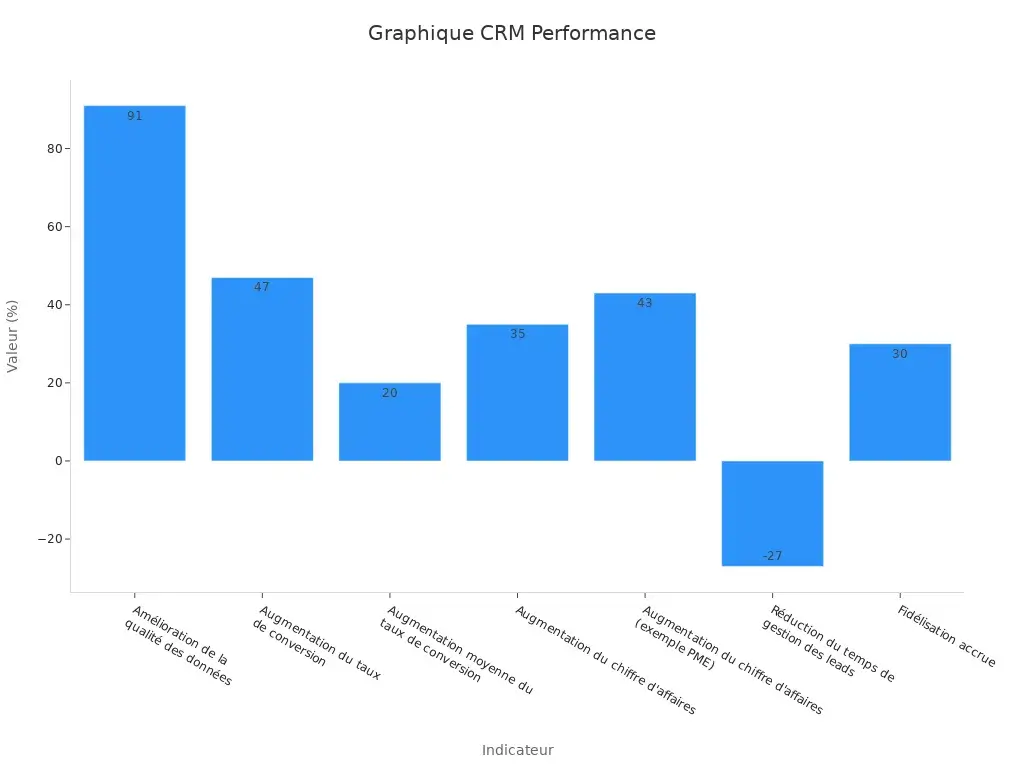
91 % des entreprises ayant intégré un CRM constatent une amélioration de la qualité des données clients.
Selon Nucleus Research, l’intégration CRM permet d’augmenter les taux de conversion jusqu’à 47 %.
L’automatisation des processus via le CRM fait progresser les taux de conversion de 14,5 % à 49 % selon les stratégies appliquées.
Indicateur | Valeur / Impact observé | Source / Exemple concret |
|---|---|---|
Amélioration de la qualité des données | 91 % des entreprises constatent une meilleure qualité | Enquête Salesforce |
Augmentation du taux de conversion | Jusqu’à 47 % d’augmentation selon Nucleus Research | Étude Nucleus Research |
Augmentation moyenne du taux de conversion | +20 % en moyenne pour les entreprises utilisant un CRM | Étude Simple CRM (800 entreprises) |
Augmentation du chiffre d’affaires | +35 % en moyenne grâce à une gestion efficace des leads | Étude Simple CRM |
Progression du taux de conversion (PME) | De 12 % à 28 % | Cas concret PME utilisant Simple CRM |
Augmentation du chiffre d’affaires (PME) | +43 % | Cas concret PME utilisant Simple CRM |
Augmentation des taux de conversion via automatisation | De 14,5 % à 49 % selon les stratégies appliquées | Données issues de marketing automation |
Réduction du temps de gestion des leads | -27 % de temps nécessaire | Étude Simple CRM |
Fidélisation accrue | +30 % de clients fidélisés | Étude Simple CRM |
L’intégration des alertes dans le CRM te permet de recevoir des notifications en temps réel (par email, Slack ou directement dans ton dashboard). Tu peux ainsi réagir immédiatement à chaque signal critique et automatiser les relances multicanales (email, SMS, chat) selon la maturité du prospect. Cette organisation améliore la personnalisation de tes messages et augmente significativement la conversion des leads.
Note : Les entreprises qui combinent landing page, CRM et alertes intelligentes constatent une hausse du taux de leads qualifiés de 35 % en un trimestre et une progression du taux de transformation pouvant atteindre 48 %.
En automatisant la détection, le scoring et l’intégration CRM, tu transformes ta prospection. Tu gagnes en efficacité, tu réduis les erreurs et tu maximises la valeur de chaque signal détecté.
Sécurité et conformité RGPD
Tu dois garantir la sécurité des données et respecter la réglementation RGPD lorsque tu automatises la détection des opportunités commerciales. La confiance de tes prospects dépend de ta capacité à protéger leurs informations personnelles et à rester conforme à la loi.
Voici comment procéder étape par étape :
Identifie les données sensibles
Commence par lister toutes les informations collectées : noms, adresses email, fonctions, interactions sur LinkedIn. Classe ces données selon leur niveau de sensibilité.Mets en place des mesures de chiffrement
Utilise des protocoles de chiffrement avancés comme AES-256 pour stocker et transférer les données. Tu limites ainsi les risques de fuite ou de piratage.Automatise l’anonymisation
Configure ton outil pour anonymiser les données non essentielles. Par exemple, masque les noms ou les emails dans les rapports si tu n’en as pas besoin pour l’action commerciale immédiate.Respecte les droits des personnes
Offre à chaque contact la possibilité d’accéder, de modifier ou de supprimer ses données. Intègre un lien de désinscription dans chaque communication automatisée.Documente tes traitements
Tiens un registre précis des flux de données. Note qui accède à quoi, à quel moment et pour quelle finalité. Cette documentation facilite les audits et prouve ta conformité.Limite l’accès aux données
Attribue des droits d’accès selon les rôles dans ton équipe. Seuls les membres autorisés doivent consulter ou modifier les informations sensibles.Teste régulièrement la sécurité
Planifie des audits internes et des tests de vulnérabilité. Mets à jour tes systèmes dès qu’une faille est détectée.
💡 Astuce : Magileads intègre des fonctionnalités de chiffrement, d’anonymisation et de gestion des droits d’accès pour t’aider à rester conforme au RGPD sans complexité technique.
Action à réaliser | Outil ou méthode recommandée | Bénéfice principal |
|---|---|---|
Chiffrement des données | AES-256, HTTPS | Protection contre les fuites |
Anonymisation automatique | Fonction intégrée Magileads | Respect de la vie privée |
Gestion des droits d’accès | Dashboard Magileads | Limitation des risques internes |
Documentation des traitements | Registre RGPD | Preuve de conformité |
Audit de sécurité | Tests réguliers, monitoring | Détection proactive des failles |
En appliquant ces bonnes pratiques, tu assures la sécurité de tes données et tu renforces la confiance de tes prospects. Tu transformes la conformité RGPD en avantage concurrentiel pour ta prospection digitale.
Exploitation des signaux d’affaires en prospection
Personnalisation des messages
Pour réussir ta prospection en 2025, tu dois personnaliser chaque message en fonction des signaux d’affaires détectés. Cette personnalisation ne se limite pas à mentionner le nom du prospect. Tu dois adapter ton approche à la situation précise de l’entreprise : changement de poste, levée de fonds, adoption d’une nouvelle technologie, ou publication récente.
Voici comment procéder :
Analyse le contexte du prospect à partir des signaux collectés.
Rédige un message qui fait référence à l’événement ou au besoin identifié.
Propose une solution concrète, adaptée à la problématique du moment.
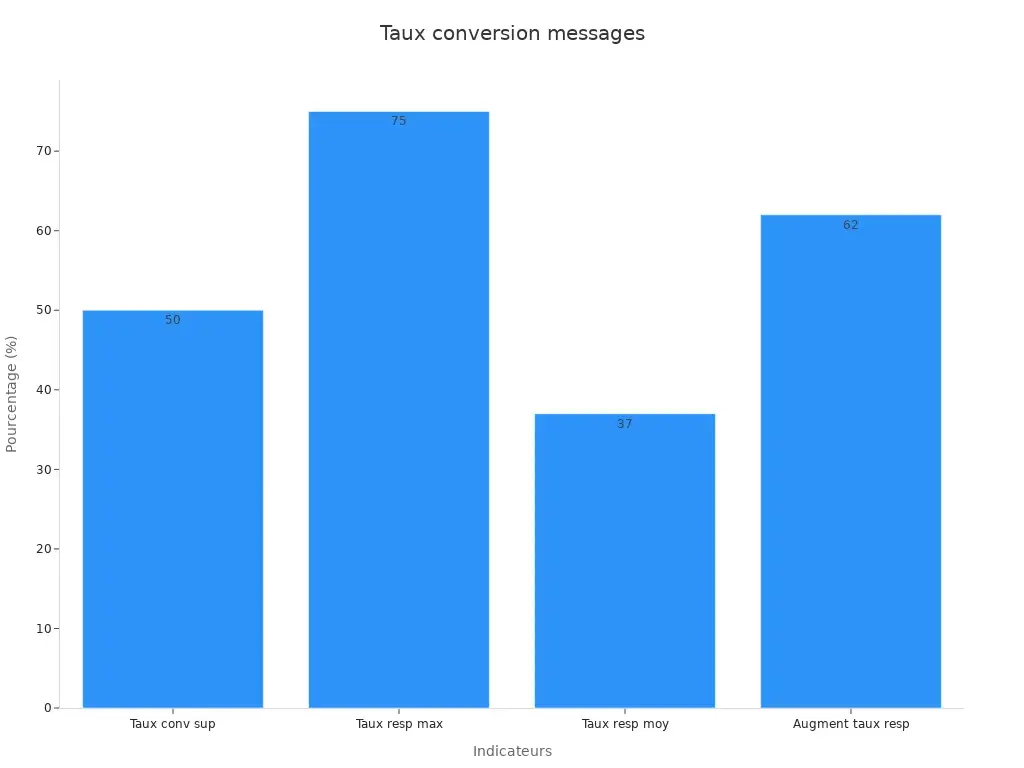
Les résultats de la personnalisation sont spectaculaires. Les études montrent que tu peux augmenter ton taux de conversion de plus de 50 % par rapport à une approche générique. Le taux de réponse peut atteindre 75 % lorsque tu bases ta prospection sur les signaux d’affaires. Un consultant indépendant est passé de 5 à 32 rendez-vous qualifiés par mois après avoir optimisé ses messages et ses séquences d’engagement.
Type d’indicateur | Valeur observée | Source / Contexte |
|---|---|---|
Taux de conversion supérieur | +50 % | Étude Université de Harvard, prospection par signaux d’affaires vs approche générique |
Taux de réponse maximum | Prospection basée sur signaux d’affaires (étude LinkedIn) | |
Taux de réponse moyen après personnalisation | 37 % | Cas d’un consultant indépendant après optimisation LinkedIn |
Nombre de rendez-vous qualifiés mensuels | De 5-6 à 32 | Consultant indépendant, avant/après personnalisation et séquence d’engagement |
Augmentation du taux de réponse avec méthode multicanal (PVC) | +62 % | Comparaison méthode PVC vs canal unique |
Taux de rendez-vous par commercial (SoftSolutions) | 22 rendez-vous/mois | Après formation et personnalisation de l’équipe commerciale |
Réduction du cycle de vente | 38 % | Équipe SoftSolutions après transformation de l’approche |
Augmentation du panier moyen | 27 % | Équipe SoftSolutions après transformation de l’approche |
💡 Astuce : Utilise des outils comme Magileads pour générer automatiquement des templates personnalisés selon chaque signal détecté. Tu gagnes du temps et tu augmentes la pertinence de tes messages.
Timing et priorisation des leads
Le bon timing fait toute la différence dans la prospection. Tu dois contacter tes prospects quand ils sont le plus réceptifs. Pour cela, appuie-toi sur le scoring des leads et sur l’analyse des données comportementales.
Voici comment optimiser le timing et la priorisation :
Classe tes leads selon leur score, basé sur les signaux d’affaires détectés et leur engagement récent.
Surveille les KPIs clés : taux de conversion entre MQL (Marketing Qualified Lead), SQL (Sales Qualified Lead) et client, durée moyenne du cycle de vente, taux d’ouverture et de clics des campagnes.
Identifie les meilleurs moments pour contacter tes prospects : jour et heure d’envoi, fréquence des relances, période du mois ou du trimestre.
Centralise toutes ces données dans un tableau de suivi pour ajuster ta stratégie en temps réel.
Voici les indicateurs à suivre pour prioriser efficacement :
Taux de conversion MQL → SQL → client.
Durée moyenne du cycle de vente.
Nombre de leads scorés au-dessus d’un seuil par rapport au volume de deals générés.
Taux d’ouverture et de clics des campagnes ciblées.
Temps moyen passé par opportunité avant la prise de contact.
Le scoring des leads, combiné à l’analyse des campagnes passées, te permet d’identifier les leads chauds et d’éviter les relances inutiles. Tu adaptes ainsi tes workflows pour maximiser l’impact de chaque action.
Conseil : Recalibre régulièrement tes critères de scoring pour rester aligné avec les évolutions du marché et les retours terrain.
Automatisation des réponses
L’automatisation des réponses transforme ta capacité à convertir rapidement les opportunités. Tu dois répondre aux signaux d’affaires en quelques minutes pour maximiser tes chances de succès. Les outils modernes, comme Magileads, te permettent de générer des réponses personnalisées et pertinentes dès qu’un signal est détecté.
Voici comment automatiser efficacement tes réponses :
Paramètre des scénarios de réponse automatique pour chaque type de signal (changement de poste, publication, levée de fonds).
Utilise l’IA pour adapter le ton et le contenu du message à chaque situation.
Intègre ces réponses dans ton CRM pour assurer un suivi sans faille.
Les chiffres sont éloquents :
Indicateur clé | Impact numérique sur la conversion commerciale |
|---|---|
Délai de réponse moyen | 47 heures (trop long pour conversion optimale) |
Réponse en 1 minute | Jusqu’à 391 % de conversions supplémentaires |
Réponse dans l’heure | 7 fois plus de chances d’avoir une conversation fructueuse |
Réponse rapide | Jusqu’à 50 % des ventes gagnées |
Appel après 30 minutes | 21 fois moins efficace |
82 % des consommateurs | Attendent une réponse dans les 10 minutes |
71 % des clients | Achètent en fonction de la qualité de l’expérience client |
Temps de réponse lent | Augmentation de 15 % du taux de désabonnement |
L’automatisation réduit drastiquement les délais de réponse. Tu engages la conversation au moment où le prospect est le plus attentif. Tu élimines les tâches répétitives et tu assures un suivi personnalisé, même à grande échelle.
Note : Les entreprises qui automatisent leurs réponses constatent une hausse significative de leur taux de conversion et une meilleure satisfaction client.
Alignement marketing et ventes
Pour exploiter pleinement le potentiel de ta prospection, tu dois aligner tes équipes marketing et ventes. Cet alignement crée une synergie qui transforme chaque opportunité en résultat concret. Tu assures ainsi une meilleure qualification des prospects, une communication plus fluide et une expérience client optimisée.
Voici comment tu peux mettre en place cet alignement :
Définis des objectifs communs
Fixe des objectifs partagés entre marketing et ventes. Par exemple, cible le même profil de client idéal et utilise des critères de qualification identiques. Tu évites ainsi les incompréhensions et tu assures une cohérence dans le suivi des leads.Harmonise les métriques et les outils
Mets en place un tableau de bord unifié. Suis les mêmes indicateurs de performance pour les deux équipes. Utilise un CRM partagé pour centraliser les informations et suivre l’avancement de chaque opportunité. Tu facilites la transparence et la prise de décision rapide.Organise des points de synchronisation réguliers
Planifie des réunions hebdomadaires pour échanger sur les signaux d’affaires détectés, les retours terrain et les priorités du moment. Tu encourages le partage d’informations et tu ajustes les actions en temps réel.Crée des workflows collaboratifs
Définis des scénarios où le marketing transmet les leads qualifiés aux ventes dès qu’un signal pertinent est détecté. Mets en place des processus d’enrichissement et de nurturing pour accompagner les prospects jusqu’à la prise de contact commerciale.Favorise la personnalisation et l’accompagnement
Utilise les données collectées par le marketing pour personnaliser les messages commerciaux. Propose un accompagnement sur mesure à chaque étape du cycle de vente. Tu renforces la confiance et tu augmentes la fidélisation.
Les résultats de cet alignement sont mesurables et impressionnants :
Tu observes une augmentation de 47 % de la valeur moyenne des contrats.
Tu améliores de 28 % le taux de fidélisation client.
Tu constates une croissance de 18 % du chiffre d’affaires à effectif constant.
Tu augmentes de 34 % le taux de conversion des leads qualifiés.
Tu réduis de 22 % le cycle de vente moyen.
Tu améliores de 41 % le Net Promoter Score.
Tu génères en moyenne 20 % de revenus supplémentaires.
Tu constates une amélioration des taux de conversion jusqu’à 32 % sur l’ensemble du cycle de vente.
Tu réduis le coût d’acquisition client de 30 %.
Tu améliores le retour sur investissement marketing (ROMI) de 24 % à 36 %.
Tu réduis la durée du cycle de vente de 18 %.
💡 Astuce : Mets en place un canal de communication direct entre marketing et ventes. Utilise des outils collaboratifs pour partager les informations en temps réel et réagir rapidement à chaque nouvelle opportunité.
En alignant tes équipes, tu crées un cercle vertueux. Tu qualifies mieux tes prospects, tu personnalises tes actions et tu accélères la transformation des opportunités en clients fidèles. Cet alignement devient un levier stratégique pour booster la performance commerciale et garantir la croissance de ton entreprise.
Bonnes pratiques et erreurs à éviter
Ne pas surinterpréter les signaux d’affaires
Tu dois apprendre à interpréter chaque indice avec discernement. Un signal isolé ne suffit pas toujours à justifier une action commerciale immédiate. Par exemple, un simple changement de poste sur LinkedIn ne signifie pas forcément un besoin urgent de nouveaux services. Prends le temps de croiser plusieurs informations avant de lancer une démarche. Pose-toi les bonnes questions : ce signal s’inscrit-il dans une tendance plus large ? Est-il cohérent avec d’autres données collectées ?
Conseil : Utilise des outils d’analyse pour vérifier la récurrence et la pertinence des signaux d’affaires avant d’engager tes ressources.
Réactivité et pertinence
La rapidité d’action fait la différence dans la prospection moderne. Tu dois réagir vite, mais toujours avec pertinence. Voici comment une démarche structurée peut t’aider :
Observe les mouvements stratégiques, comme le recrutement de profils seniors après une levée de fonds.
Analyse rapidement ces signaux pour anticiper les besoins, par exemple des acquisitions ou des partenariats.
Constitue des listes de prospection ciblées en identifiant d’autres entreprises dans une situation similaire.
Adapte tes messages en contactant les bons interlocuteurs avec des contenus personnalisés, ajustés manuellement avant toute automatisation.
Rappelle-toi que l’information vieillit vite : une réaction tardive réduit fortement tes chances de succès.
Astuce : Mets en place des alertes automatiques pour ne jamais manquer un signal clé et garde toujours une approche personnalisée.
Qualité des données et reporting
La qualité des données et un reporting précis sont essentiels pour optimiser ta prospection. Tu dois t’assurer que chaque information collectée est fiable, à jour et exploitable. Un reporting efficace te permet de suivre tes performances et d’ajuster ta stratégie en temps réel.
KPI mesuré | Description | Impact sur la prospection B2B |
|---|---|---|
Pourcentage d’appels aboutissant à un rendez-vous | Amélioration du taux de conversion grâce à une meilleure qualification | |
Taux de conversion des prospects en leads | Proportion de prospects devenant des leads qualifiés | Optimisation du ciblage et personnalisation des approches |
Taux de rétention clients | Pourcentage de clients fidèles sur une période donnée | Indicateur indirect de la qualité de la prospection et de la satisfaction client |
Un reporting clair favorise l’alignement entre marketing et ventes. Tu offres à tes équipes une visibilité en temps réel sur leurs résultats, ce qui motive et dynamise la prospection. L’analyse régulière des données te permet d’anticiper les évolutions du marché et d’ajuster ton offre.
Identifie précisément les décideurs grâce à LinkedIn pour réduire les cycles de vente.
Utilise un CRM pour automatiser les relances et maintenir l’engagement.
Exploite les retours clients pour affiner ton argumentaire.
Mets en place un processus unifié entre marketing et ventes pour maximiser la conversion.
Note : Une donnée fiable et un reporting rigoureux transforment chaque action en opportunité mesurable et optimisent tes ressources commerciales.
Mesure de l’impact commercial
Pour optimiser ta prospection, tu dois mesurer l’impact commercial de chaque action. Cette démarche te permet d’identifier ce qui fonctionne et d’ajuster ta stratégie en temps réel. Commence par définir des indicateurs de performance clairs. Tu peux suivre le nombre de rendez-vous obtenus, le taux de conversion des leads ou encore la durée moyenne du cycle de vente.
Voici comment procéder étape par étape :
Identifie les bons indicateurs
Sélectionne des KPIs adaptés à ton activité : nombre d’opportunités générées, taux de transformation, chiffre d’affaires issu des nouveaux clients, ou encore taux de rétention.Analyse les résultats régulièrement
Mets en place un reporting hebdomadaire ou mensuel. Compare les performances avant et après l’intégration des signaux d’affaires détectés dans tes workflows commerciaux.Utilise les outils adaptés
Intègre les données dans ton CRM pour centraliser le suivi. Les plateformes comme Magileads facilitent la visualisation des résultats et l’automatisation des rapports.Ajuste ta stratégie en continu
Si tu constates une baisse du taux de conversion, analyse les signaux d’affaires déclencheurs et adapte tes messages ou tes canaux de prospection.
Les chiffres parlent d’eux-mêmes :
95 % des opportunités de vente proviennent d’indices détectés dans l’écosystème des entreprises.
Le volume de signaux d’affaires exploitables a quadruplé en quatre ans, passant de 67 327 à 300 000, ce qui multiplie les occasions de contact qualifié.
86 % des professionnels utilisent ces informations pour la prospection téléphonique, ce qui améliore la pertinence des échanges.
80 % des entreprises intègrent ces données dans leur CRM, ce qui optimise la gestion des leads et accélère la prise de décision.
74 % des sociétés constatent une amélioration globale de leurs performances commerciales grâce à l’utilisation d’un CRM.
💡 Astuce : Crée un tableau de bord simple pour visualiser l’évolution de tes indicateurs clés. Mets à jour ce tableau après chaque campagne pour repérer rapidement les tendances et ajuster tes actions.
En mesurant l’impact de façon rigoureuse, tu transformes chaque signal détecté en levier de croissance. Tu gagnes en efficacité, tu améliores la qualité de ta prospection et tu démontres la valeur ajoutée de ta démarche auprès de ta direction.
Cas d’usage et exemples concrets des signaux d’affaires

Scénarios d’utilisation Magileads
Tu veux transformer ta prospection B2B en signaux d’affaires ? Découvre comment des entreprises utilisent Magileads pour détecter, scorer et convertir plus efficacement. Voici quelques scénarios réels qui montrent la puissance de l’automatisation et du ciblage intelligent :
Étude de cas | Contexte | Approche | Résultats clés |
|---|---|---|---|
Entreprise de services B2B | Développement clientèle dans de nouveaux secteurs | Enrichissement base de données, segmentation fine, campagnes emails personnalisées | +35% taux de conversion, +20% taux d’ouverture emails, -25% temps qualification prospects |
Agence de marketing digital | Élargir clientèle dans de nouveaux secteurs | Base de données mondiale, prospection multicanal automatisée, suivi et optimisation des campagnes | +50% nouveaux clients en 6 mois, -40% coût acquisition client, +30% taux de réponse grâce à personnalisation |
Entreprise de services informatiques | Prospection multicanal (emails, LinkedIn, SMS) | Envoi séquencé et suivi multicanal | +40% taux de réponse en 2 mois |
Société SaaS B2B | Ciblage PME secteur finance | Algorithmes de ciblage intelligent | Doublement du taux de conversion, réduction des efforts sur prospects non pertinents |
Entreprise de marketing | Automatisation du suivi des interactions | Suivi des réponses et interactions multicanales, alertes en temps réel | +15% taux de transformation grâce à relances précises |
Tu peux adapter ces workflows à ton secteur pour accélérer la détection des leads et maximiser la conversion.
Templates de messages IA
L’IA de Magileads te permet de générer des messages personnalisés qui augmentent significativement les taux de réponse. Près de 29 % des commerciaux utilisent déjà l’IA pour rédiger leurs messages, et 74 % constatent une hausse des réponses lors des appels de prospection. Voici quelques exemples de templates efficaces :
🎯 « Bonjour {Prénom}, félicitations pour votre nouveau poste chez {Entreprise} ! Je vous propose un échange pour explorer comment nos solutions peuvent accompagner vos nouveaux défis. »
📈 « Bonjour {Prénom}, j’ai remarqué votre récente levée de fonds. Nous avons aidé plusieurs entreprises de votre secteur à structurer leur croissance. Un appel rapide pour en discuter ? »
🤝 « Bonjour {Prénom}, suite à votre publication sur {Sujet}, je pense que nos expertises pourraient se compléter. Seriez-vous disponible pour un échange ? »
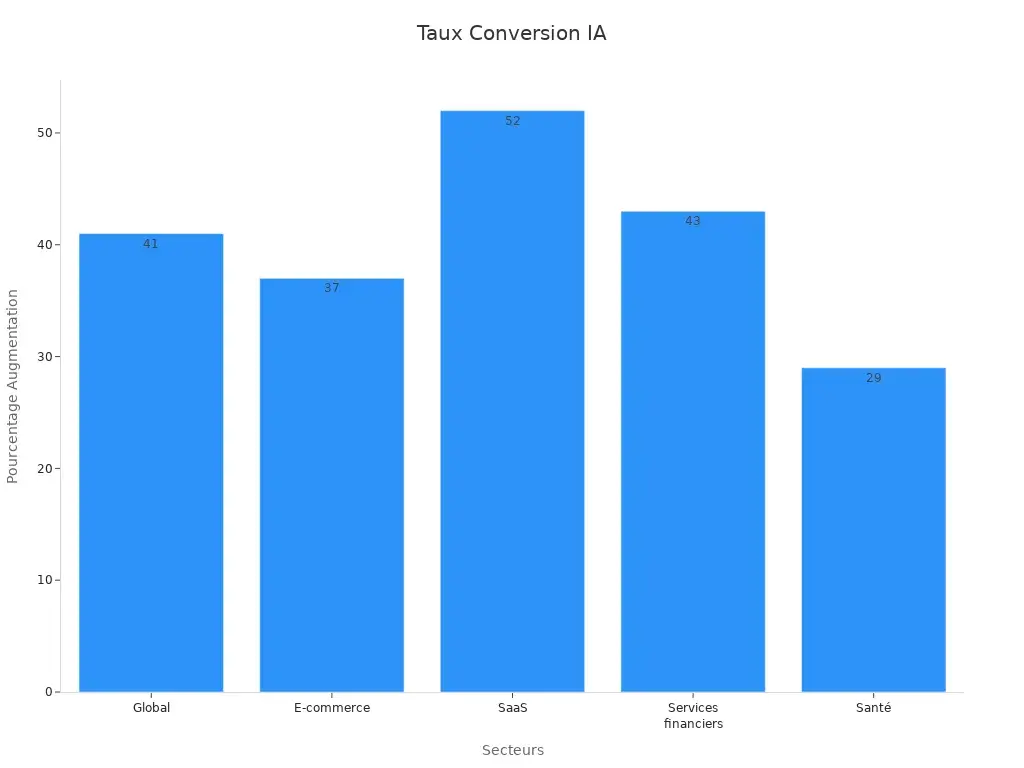
Secteur | Augmentation du taux de conversion avec IA |
|---|---|
Global | |
E-commerce | +37% |
SaaS | +52% |
Services financiers | +43% |
Santé | +29% |
Tu constates aussi une hausse de 29 % du taux d’ouverture des emails et de 41 % du taux de clics grâce à la personnalisation IA.
Résultats et ROI
L’intégration des signaux d’affaires dans tes campagnes de prospection génère des résultats concrets. Tu observes en moyenne une augmentation de 43 % du chiffre d’affaires, portée par un ciblage avancé et des données enrichies en temps réel. L’utilisation de callbots et le scoring comportemental boostent la performance globale, tout en renforçant la durabilité de la relation client.
Pour garantir un ROI optimal, tu dois suivre des indicateurs clés comme le taux de contact, le nombre de rendez-vous obtenus et le retour sur investissement. Ajuste ta stratégie en fonction de ces données pour maintenir une croissance durable et mesurable.
En adoptant Magileads, tu transformes chaque signal détecté en opportunité commerciale et tu prends une longueur d’avance sur tes concurrents.
Intégrer les signaux d’affaires dans la stratégie commerciale
Culture de la veille et de l’agilité
Pour rester compétitif, tu dois instaurer une véritable culture de la veille et de l’agilité dans ton entreprise. Cette démarche te permet d’anticiper les évolutions du marché et de saisir les meilleures opportunités avant tes concurrents. Voici comment structurer ta veille et renforcer ton agilité :
Mets en place une veille technologique et concurrentielle. Utilise des méthodes comme la cartographie technologique, la détection des signaux d’affaires faibles et le benchmark pour repérer les tendances émergentes.
Appuie-toi sur des outils avancés, notamment des plateformes d’intelligence artificielle. Ces solutions analysent de grands volumes de données (articles, brevets) et extraient des insights pertinents pour alimenter ta stratégie.
Configure un système d’alerte avancé. Tu pourras ainsi anticiper les menaces et saisir les opportunités plus rapidement, ce qui renforce la pérennité de ton activité.
Prends exemple sur des PME innovantes. Par exemple, une biotech a détecté un dépôt de brevet suspect et a pu réagir immédiatement pour protéger ses intérêts.
Encourage une culture d’entreprise ouverte et curieuse. Cette attitude favorise l’innovation continue et t’aide à rester maître de ton développement.
Conseil : Organise des points de veille réguliers avec tes équipes pour partager les découvertes et ajuster ta stratégie en temps réel.
Formation des équipes
Tu dois former tes équipes pour qu’elles maîtrisent les outils de veille et d’analyse. La formation continue garantit que chaque collaborateur sait détecter, interpréter et exploiter les informations stratégiques. Voici comment procéder :
Propose des ateliers pratiques sur l’utilisation des plateformes d’intelligence artificielle et des outils de veille.
Mets en place des sessions de partage d’expérience pour que chacun puisse apprendre des succès et des erreurs du groupe.
Crée des guides simples pour expliquer comment réagir face à un signal détecté et comment intégrer ces informations dans les workflows commerciaux.
Encourage la montée en compétences sur la gestion des données et la conformité RGPD.
Astuce : Valorise les initiatives individuelles et récompense les collaborateurs qui identifient des opportunités grâce à la veille.
Adaptation continue
Le marché évolue sans cesse. Tu dois donc adapter ta stratégie commerciale en continu. Mets à jour tes processus dès qu’une nouvelle tendance ou un changement réglementaire apparaît. Voici quelques actions concrètes :
Analyse régulièrement les résultats de ta veille et ajuste tes priorités en fonction des signaux d’affaires détectés.
Réévalue tes outils et méthodes tous les trimestres pour rester à la pointe de l’innovation.
Implique tes équipes dans la réflexion stratégique pour qu’elles proposent des améliorations et des ajustements.
Mesure l’impact de chaque adaptation sur tes performances commerciales à l’aide de tableaux de bord clairs.
Note : L’adaptation continue te permet de transformer chaque changement en opportunité et de renforcer la résilience de ton entreprise.
Pour réussir ta prospection en 2025, tu dois suivre une démarche structurée :
Détecte les signaux d’affaires grâce à des indicateurs financiers et commerciaux précis.
Automatise la collecte et l’analyse avec des outils comme Magileads, qui augmente le taux de conversion de 30 % et réduit de moitié le temps de gestion des contacts.
Personnalise chaque action et mesure l’impact avec des KPI adaptés.
Indicateur | Utilité principale |
|---|---|
Suivre la rentabilité | |
Capacité d’autofinancement (CAF) | Anticiper les risques financiers |
Ratio dette nette / EBITDA | Évaluer la solidité financière |
Investissements par salarié | Mesurer la préparation à l’avenir |
Adopte l’agilité, ajuste tes campagnes en temps réel et partage tes retours pour progresser continuellement.
FAQ sur les signaux d’affaires
Comment détecter rapidement des signaux d’affaires pertinent ?
Utilise un outil comme Magileads. Configure des filtres selon ton secteur et ta cible. Reçois des alertes en temps réel dès qu’un événement clé survient. Analyse les signaux dans ton tableau de bord pour agir sans délai.
Quels types de signaux d’affaires dois-tu surveiller en priorité ?
Surveille les changements de poste, les levées de fonds, les recrutements, l’adoption de nouvelles technologies et les publications stratégiques. Ces signaux d’affaires révèlent souvent un besoin immédiat ou une ouverture à de nouveaux partenaires.
Comment personnaliser tes messages grâce aux signaux d’affaires détectés ?
Analyse le contexte du prospect. Mentionne l’événement ou le besoin identifié dans ton message. Propose une solution adaptée. Utilise des templates personnalisés générés par l’IA pour gagner du temps et augmenter la pertinence.
L’automatisation de la prospection est-elle compatible avec la RGPD ?
Oui, tu dois choisir des outils qui chiffrent et anonymisent les données. Magileads respecte la RGPD. Tu peux gérer les droits d’accès et documenter chaque traitement pour garantir la conformité.
Comment mesurer l’efficacité de ta prospection basée sur les signaux d’affaires ?
Suis des indicateurs comme le taux de conversion, le nombre de rendez-vous obtenus et le temps de réponse. Mets en place un reporting régulier pour ajuster ta stratégie et maximiser ton retour sur investissement.
Dois-tu toujours agir sur chaque signaux d’affaires détecté ?
Non, analyse la pertinence de chaque signal. Croise plusieurs indices avant d’engager une action. Privilégie les signaux forts ou récurrents pour optimiser tes ressources et éviter les démarches inutiles.
Quels outils utiliser pour automatiser la détection des signaux d’affaires ?
Opte pour des solutions comme Magileads. Tu bénéficies d’une veille automatisée, d’un scoring intelligent et d’une intégration CRM. Ces outils facilitent la détection, la priorisation et le suivi des opportunités commerciales.
Comment former tes équipes à l’exploitation des signaux d’affaires ?
Organise des ateliers pratiques. Propose des guides simples sur l’utilisation des outils et l’analyse des signaux d’affaires. Encourage le partage d’expérience et la montée en compétences pour renforcer l’efficacité collective.
Voir également
Développer Une Stratégie Commerciale Performante Pour 2025
Le Guide Ultime Pour La Prospection Commerciale En 2024
Quinze Outils Essentiels Pour Révolutionner Votre Stratégie De Vente
Utiliser Les Données Clés Pour Améliorer La Prospection B2B
Méthodes Efficaces Pour Automatiser La Prospection Commerciale